UROVO / Barcode scanners
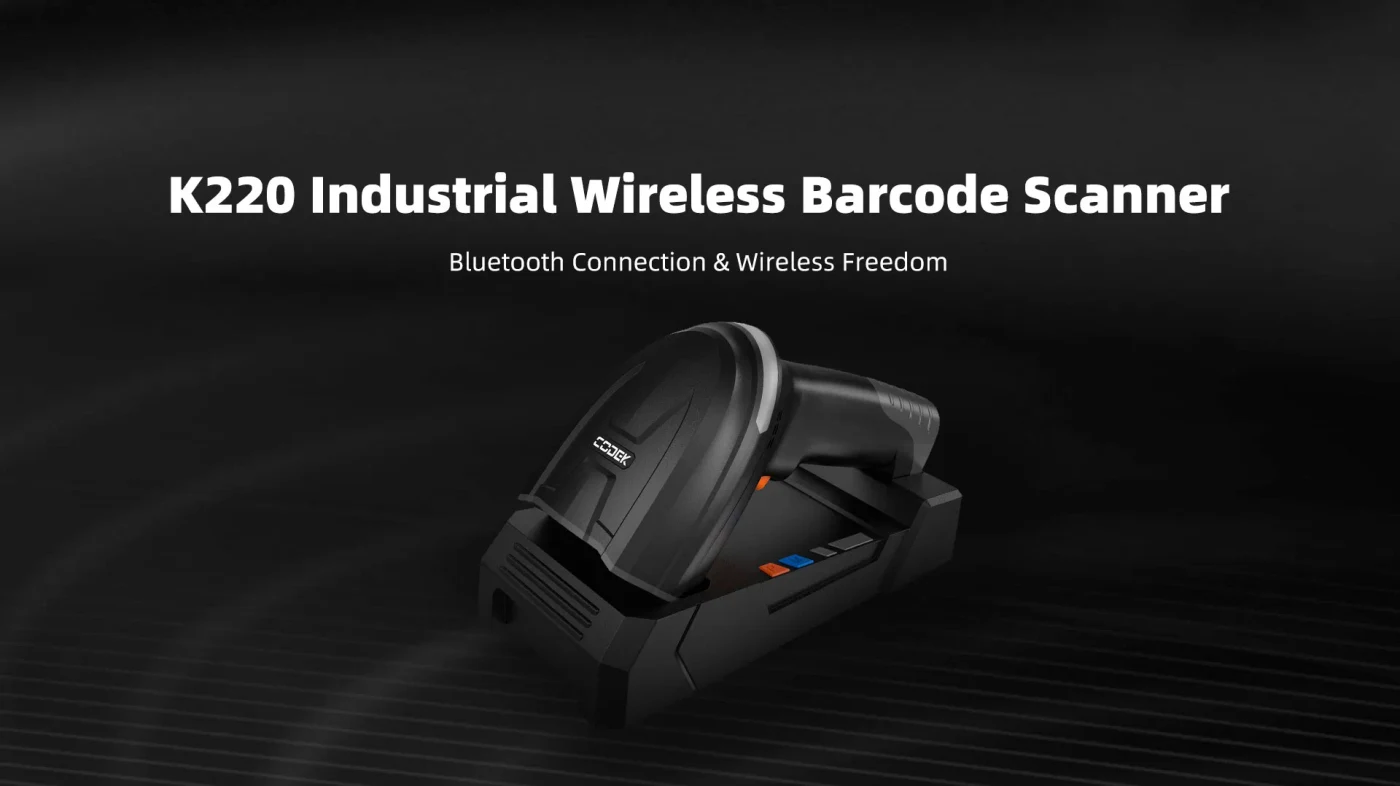
K220: Barcode scanners
UROVO K220 is an industrial wireless barcode scanner for DPM, 1D/2D and screen-code capture. The official page lists variable red and white illumination, a 1.3 MP sensor, 3200 mAh power, IP54 protection and synchronous, asynchronous or batch modes; code quality, station geometry and battery claims require testing.
Suggested profiles: industrial production, quality, parcel and workstation barcode capture
- Scan angle
- Roll 360 degrees; pitch +/-60 degrees; skew +/-60 degrees
- Battery
- 3200 mAh high-capacity battery; up to 25 hours or 40,000 scans are manufacturer references under stated conditions
- Protection
- IP54; 1.8 m drop resistance listed
- Communication
- Synchronous, asynchronous and batch modes
- Dimensions and weight
- 98 x 72 x 186 mm; scanner 238 g; cradle 216 g
- Sensor
- 1280 x 1080, 1.3 MP CMOS, 60 frames per second
The exact model, regional configuration and commercial terms require project confirmation.
Browse by device capability
K220 / Browse by device capability
UROVO is the primary established product resource, with SEUIC (Dongji) and selected platforms used where the capture method, form factor or deployment requirement needs another option. Published models follow an evidence, regional-configuration and RuggedLayer validation path.
Suggested profiles
- Production and quality stations using DPM or marked parts
- Parcel, shipping and workstation capture where a wireless scanner is preferred
- Mixed paper, reflective, curved and screen-code scanning pilots
Browse by device capability
- A wireless scanner is designed for difficult DPM and mixed 1D/2D capture conditions.
- Red and white variable illumination can be matched to code surface and background conditions.
- Vibration, buzzer and LED provide several operator feedback paths.
- Battery life, resolution and drop figures are manufacturer references, not a RuggedLayer acceptance result.
How a device enters the portfolio
Key specifications
Manufacturer-listed configuration; confirm the exact variant before ordering.
Data capture
| Sensor | 1280 x 1080, 1.3 MP CMOS, 60 frames per second |
|---|---|
| Scan angle | Roll 360 degrees; pitch +/-60 degrees; skew +/-60 degrees |
Connectivity
| Communication | Synchronous, asynchronous and batch modes |
|---|
Power and physical
| Dimensions and weight | 98 x 72 x 186 mm; scanner 238 g; cradle 216 g |
|---|---|
| Battery | 3200 mAh high-capacity battery; up to 25 hours or 40,000 scans are manufacturer references under stated conditions |
Environmental
| Protection | IP54; 1.8 m drop resistance listed |
|---|---|
| Environmental | Operating -20 to +50 C; storage -40 to +70 C; 5-95% RH non-condensing; ambient light immunity listed up to 100,000 lux |
Other configuration
| Illumination | Switchable warm-white LED and red LED |
|---|---|
| Aimer | 650 nm laser |
| Resolution | 3 mil or better listed by the manufacturer |
| Decode capabilities | 1D and 2D symbologies including UPC/EAN, Code 128/39, QR Code, Data Matrix and PDF417; confirm the full profile |
| Feedback | Vibration, buzzer and LED |
A final shortlist depends on the application, scan or RFID workload, operating environment, country, deployment volume and support expectations.
A clear handoff at every layer
Five service layers for a more predictable device program.
RuggedLayer organizes access to multiple manufacturers into a consistent engagement model. Each layer has a defined input, deliverable and evidence boundary.
Service layers
- Fix code distance, illumination, lens position, trigger timing and mount before evaluating scan performance.
- DPM readability depends on marking method, surface, contrast and lighting; do not equate 3 mil with a guaranteed pass rate.
- Choose synchronous, asynchronous or batch behavior with the host-system owner and define reconnect handling.
Deployment accessories
- Scope the charging cradle, stand, cable, mounting and spare-battery arrangement for the station.
- Add controlled lighting, shielding or mechanical positioning when glare, vibration or reflective parts affect the pilot.
RuggedLayer Test Lab
Define a useful test, not a vague benchmark.
Tell us the labels, tags, application and operating conditions that matter.
- 01
Test the full code set, including DPM dot peen, laser etch, ink mark, chemical etch, damaged and reflective samples.
- 02
Repeat reads over the required angle, distance, lighting and line-speed range while recording host latency.
- 03
Freeze illumination, feedback, communication mode, battery, mount and exception behavior in acceptance.
Project intake
K220 / Start with enough context to make the next step useful.
Choose the closest project intent and describe only non-confidential workflow, application and deployment requirements.