Custom programs

Private label and device customization with an explicit responsibility model.

RuggedLayer coordinates requirements, platform selection, validation, quality communication and delivery with qualified manufacturing partners.

Start an OEM project

RuggedLayer / OEM / ODM

Customization levels

01

Private label

Logo, packaging, manual and approved boot or UI branding.

Lowest change level
02

Configured platform

Applications, settings, MDM, accessories and capture profiles.

Deployment-focused
03

Modified platform

Qualified module, interface, accessory, firmware or limited structural changes.

Engineering review
04

ODM program

Requirements, NRE, prototype, certification coordination, pilot and production.

Program governance

Is a custom program the right next step?

Choose the lowest customization level that solves the business problem.

OEM is not automatically the best answer to a branding request. First establish whether a repeatable workflow, a proven platform and a realistic deployment plan justify custom work.

You may be ready for OEM / ODM when

  • You sell a repeatable workflow, such as receiving, picking, cycle counting or asset tracking, across multiple customer sites.
  • An existing platform already covers the capture method, ergonomics, environment and connectivity; branding, preloading and controlled configuration create most of the value.
  • You can name the target markets, pilot scope, initial or annual volume, launch window and the person who owns application acceptance.
  • You are prepared to evaluate MOQ, NRE, sample timing, certification responsibility, intellectual-property terms and lifecycle obligations before production.

Start with validation or selection first when

  • The request is for one unique device for one customer, with no evidence that the requirement will repeat.
  • The only confirmed need is a logo, but your application has not been tested on a candidate platform yet.
  • You expect a no-cost sample, zero NRE or MOQ, immediate mass production, universal certification or global support without project-specific evidence.
  • You expect RuggedLayer or a manufacturing partner to own your SaaS backend, application roadmap, customer data or every local support obligation.

Example decision path / warehouse SaaS

A warehouse management SaaS company wants its own handheld.

The strongest starting point is usually a validated hardware program around the SaaS workflow, not a new enclosure. The route can move from configured platform to private label and only then to hardware modification when a repeated gap is proven.

  1. 1. Define the work, not just the logo

    Map receiving, put-away, picking, packing and cycle counts. Record 1D/2D or UHF RFID capture, trigger and keypad needs, gloves, cold or dusty areas, offline behavior, Wi-Fi/cellular coverage and required accessories.

  2. 2. Validate the SaaS application

    Identify the app architecture, Android range, keyboard-wedge, Intent or SDK path, MDM, network and device-management assumptions. Test a small candidate set with a real acceptance workflow before choosing a branded baseline.

  3. 3. Start with private label plus configuration if the platform works

    A suitable platform can carry your logo, packaging, approved boot or UI branding, preloaded application, scan profile, MDM settings and accessory bundle. This can avoid hardware redesign NRE while keeping the device baseline repeatable; commercial terms still require confirmation.

  4. 4. Escalate only for a repeated platform gap

    If multiple sites need a physical trigger, keypad, scan engine, UHF reader, cold-storage battery or interface that the baseline cannot provide, assess a modified platform or ODM program against volume, NRE, certification, schedule and acceptance criteria.

  5. 5. Freeze a golden sample before rollout

    Agree the exact hardware, firmware, application build, branding, accessories, test method and acceptance record. Run a pilot, close production-readiness responsibilities and define application release, replacement and revalidation ownership.

Beyond the listed platforms

Another rugged handheld can be the right starting point.

Beyond the UROVO and SEUIC (Dongji) platforms listed on this site, RuggedLayer can evaluate another rugged handheld computer, a customer-specified reference device or a qualified manufacturing platform for a scoped private-label, configuration, modification or ODM project. The starting point is the exact workflow and device variant; an evaluation does not make an unverified model part of the public catalog.

Bring this route to an evaluation when

  • You can identify the exact model, hardware revision and target configuration, or provide a reference unit that can be inspected through an approved project channel.
  • The device needs to carry a real application and capture path: Android, web or cross-platform software with 1D/2D, UHF RFID or NFC, buttons, trigger, MDM, offline and network requirements defined.
  • You can state the target countries, pilot scope, initial or annual volume, launch window and the person who owns application acceptance.
  • The requested branding, configuration, module, interface or enclosure change supports a repeatable workflow rather than a one-off device for one customer.
  • The project can identify who grants branding or technical access and who owns certification, intellectual-property, warranty/RMA, application acceptance and EOL decisions.

Validate the platform first when

  • The model, hardware revision, radio bands or target configuration is unknown, or is described only by a product family name.
  • There is no sample, reference unit, usable documentation or approved route to the platform owner and manufacturing contact.
  • The application has not run on the candidate device, or scan, RFID, trigger, battery, offline or MDM behavior is still an assumption.
  • The request depends on third-party source code, firmware source, proprietary SDKs or manufacturing drawings without an established right to receive or modify them.
  • The project is one-off, the target market or volume is unclear, or it assumes fixed price, MOQ, NRE, lead time, certification or support before a project review.

Possible customization scope

  • Brand and packaging

    Logo, housing marks, packaging, manuals and approved boot or UI branding, subject to trademark rights and platform support.

  • Application and deployment setup

    Preloaded application, scan profiles, RFID/NFC settings, MDM enrollment or staging, device policy and an agreed accessory bundle.

  • Capture and operator hardware

    Buttons, trigger, scan engine, RFID module, camera, battery, interfaces and accessories when the platform offers a feasible and authorized option.

  • Limited platform changes

    Finite enclosure, firmware, interface or module adjustments can be assessed when the platform owner and manufacturing partner can support the change.

  • Workflow-specific device kits

    A repeatable handheld package for warehouse, logistics, retail, manufacturing or field service workflows, including validation and deployment inputs within scope.

What this does not include automatically

  • It does not mean that every third-party model can be sourced, branded or modified.
  • It does not grant access to source code, firmware source, proprietary SDKs, factory drawings or another party's intellectual property.
  • A changed enclosure, module, battery or radio can affect IP, drop, temperature, EMC, wireless and carrier performance; those effects require project-specific revalidation.
  • Target-market certification, radio bands, labeling, importer and legal-manufacturer responsibilities must be assigned for the actual configuration and countries.
  • MOQ, NRE, price, sample or production schedule, availability, warranty, RMA and local repair coverage are not fixed by this page.
  • Production is performed by qualified manufacturing partners within the agreed project scope; RuggedLayer coordinates only the requirements, validation, quality and delivery responsibilities assigned in writing.
  • The SaaS company remains responsible for application logic, backend, customer data, software releases and customer support unless a separate written scope says otherwise.

What the first assessment can return

  • A route recommendation: use a listed or selected platform, validate the reference device, or assess Private Label, Configured Platform, Modified Platform or ODM.
  • An evidence gap list for the exact model, variant, application, capture method, environment, target market and platform access.
  • A customization boundary showing what can be configured, what needs engineering input and what should remain out of scope.
  • A sample or Golden Sample path with a test method, acceptance criteria and the owner of each sign-off.
  • A commercial and lifecycle question list covering MOQ, NRE, certification, schedule, IP, change control, warranty/RMA and EOL planning.
  • A clear next action: device shortlist, Application Validation, sample request, reference-device feasibility review or a scoped OEM brief.
Discuss another rugged handheld

Responsibility model

A branded device still needs three accountable teams.

The SaaS company owns the product and customer outcome. RuggedLayer coordinates the agreed device and delivery scope. Qualified manufacturing partners perform production and provide the manufacturing inputs assigned to them in the project agreement.

A branded device still needs three accountable teams.
WorkstreamSaaS company / buyerRuggedLayerQualified manufacturing partner
Workflow and requirementsOwn user tasks, customer requirements, product priorities and application acceptance criteria.Structure the workflow, identify device constraints and turn requirements into a scoped hardware brief.Confirm platform limits, available configurations and production constraints for the proposed device.
Application and platform validationProvide the test workflow and non-confidential application context; retain responsibility for software behavior and release.Coordinate device, OS, firmware, SDK, capture method, MDM, network and accessory validation within the agreed scope.Provide agreed samples, platform documentation and technical responses needed for feasibility and test work.
Branding and configurationSupply approved trademark assets, brand rules, application build, packaging content and configuration decisions.Scope branding, preloading, scan/RFID profiles, staging and deployment configuration, then record the agreed baseline.Assess the physical process and implement the approved branding or platform changes in production.
Market and commercial planConfirm target countries, pilot and volume assumptions, budget, launch timing and customer support expectations.Coordinate the feasibility review, shortlist, sample path and commercial questions; do not infer MOQ, NRE or delivery dates.Provide the production, configuration and certification inputs assigned by the project and target market.
Acceptance and launchDefine success criteria, approve the golden sample and own the SaaS customer launch decision.Coordinate sample review, validation records, pilot handover, deployment profile and the agreed delivery scope.Execute production and the agreed manufacturing quality and change-control records.
Lifecycle and supportOwn application maintenance, customer support responsibilities and the product roadmap.Coordinate replacement planning, RMA routing, revalidation and lifecycle communication when included in the agreement.Support agreed production changes, component continuity and EOL inputs within its contractual role.

OEM feasibility brief

Bring the inputs that make a feasibility answer useful.

The first review is a structured conversation, not a request for confidential binaries. It should produce a route recommendation and a list of assumptions that can be tested.

Useful inputs

  • Workflow, users, task frequency and the operational failure that the hardware must reduce.
  • Capture requirements: 1D/2D, DPM, UHF RFID or NFC, read distance, trigger, keypad, camera and peripherals.
  • Application context: native Android, web or cross-platform, Android range, integration path, MDM and offline/network needs.
  • Environment: indoor/outdoor, cold storage, dust, wet areas, drop exposure, gloves, cleaning and charging conditions.
  • Target countries and markets, wireless bands, certification responsibility, power plug, labeling and importer requirements.
  • Pilot size, initial order estimate, annual demand range, target launch window and an indicative budget band.
  • Branding and customization: logo, packaging, boot/UI, accessories, enclosure or interface changes and existing reference device.
  • Ownership expectations: application acceptance, legal-manufacturer role, support split, warranty/RMA path, IP and EOL planning.

What the first review can return

  • A fit assessment and a recommended starting tier: selection, Application Validation, Private Label, Configured Platform, Modified Platform or ODM.
  • A candidate platform shortlist with the assumptions and application-validation work still required.
  • A scoped feasibility summary covering the material risks, dependencies and open decisions.
  • A sample or golden-sample path with test method, acceptance criteria and the owner of each sign-off.
  • A commercial question list for MOQ, NRE, certification, sample and production schedules, warranty, IP, change control and lifecycle.
  • A clear next action, such as application validation, sample request, feasibility assessment or a defined project brief.
Start an OEM project

Do not send APKs, source code, credentials, certificates, private keys, customer datasets or restricted technical files through the public form. Agree an approved transfer method first.

Interactive concept preview

See your brand on a rugged handheld.

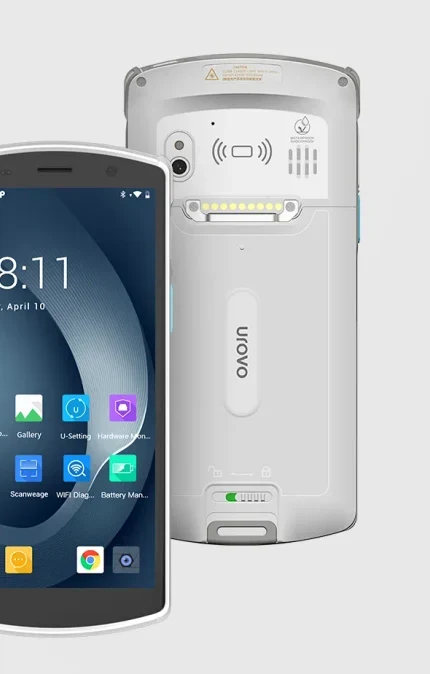
Enter a wordmark or choose a logo to preview a rear-housing print or badge direction.
PNG, JPEG or WebP, up to 5 MB. A transparent PNG works best.

Your text and image stay in this browser and are not uploaded.

Live device preview
Rear view of a concept rugged handheld with a custom brand on its housing

Concept only. Final placement, color, process, trademark approval and platform feasibility require project review.

Feasibility · Golden sample · Production readiness

Project gates

  1. 01

    Feasibility

    Confirm requirement, volume, budget, schedule, region and ownership.

  2. 02

    Golden sample

    Freeze hardware, firmware, branding, test and acceptance baselines.

  3. 03

    Production readiness

    Close certification, quality, packaging, warranty and change-control responsibilities.

Turn the idea into a structured OEM brief.

A concise project brief lets us assess platform fit before promising a schedule or price.

Start an OEM project