Dingdong (Cayman) Limited / Fresh-food e-commerce
A digital fresh-food supply chain for Dingdong
Customer deployment reference / UROVO hardware platform
Dingdong used DT40 enterprise terminals to connect receiving, shelving, price-tag work, inventory, traceability and inspection across a fresh-food fulfillment network.

Case Studies
Design the mobile workflow before locking the device SKU.
High forward-stocking costs, difficult food traceability and coordination across many stores, systems, teams and products made the existing operation difficult to control.
Workflow solutions
Priority workflows
The DT40 workflow binds goods to storage locations, makes stock visible across stores, supports replenishment and connects a 7+1 food-safety control process from source to customer.
DevicesUROVO DT40 enterprise intelligent terminal
Solution planning sequence
Solution planning sequence
A reliable deployment combines the right capture method, application behavior, connectivity, ergonomics, charging and replacement process. Solution design keeps those choices connected.
01 / Receive goods
Capture incoming goods and the initial storage decision.
Starts the traceability record before fresh inventory is shelved.
02 / Bind goods to location
Associate products with their storage locations during shelving.
Makes available stock visible across the fulfillment operation.
03 / Apply FIFO handling
Use inventory events to prioritize short-shelf-life goods.
Supports first-in, first-out decisions for perishable inventory.
04 / Maintain traceability
Record anti-counterfeit, inspection and food-safety control events.
Connects the product record from source and warehouse handling through to fulfillment.
05 / Support order fulfillment
Use the current stock record for replenishment and order execution.
Keeps receiving, shelving, inventory and delivery operations connected rather than isolated.
Case Studies
Outcome-led scope
Solution pages will recommend capabilities first. Exact models remain replaceable until testing confirms the best fit.
Fulfillment context
The documented operating context reaches almost one million orders per day.
Inventory method
First-in, first-out handling supports short-shelf-life goods.
Operational scope
Receiving, shelving, inventory, anti-counterfeit traceability and supervisory inspection are covered.
Engineering and supply services
Five service layers for a more predictable device program.
RuggedLayer organizes access to multiple manufacturers into a consistent engagement model. Each layer has a defined input, deliverable and evidence boundary. Hardware margin, validation, staging, project management and lifecycle support are distinct value streams. Scope and fees depend on the project.
Select
Receiving staff, shelvers, replenishment teams, pickers, food-safety inspectors and fulfillment supervisors.
Validate
Barcode and item-location events carrying SKU, lot or batch, quantity, receipt time, storage location, status and operator.
Deploy
WMS or store inventory, order fulfillment, replenishment, pricing or label work, food-safety traceability and inspection records.
Commercial boundaries
Short shelf life, wet or damaged labels, chilled areas, high item velocity, FIFO rules and unstable coverage in storage zones.
A clear handoff at every layer
Five service layers for a more predictable device program.
Hardware margin, validation, staging, project management and lifecycle support are distinct value streams. Scope and fees depend on the project.
Frontline workflow application
Task screens guide receiving, location confirmation, picking, counting, packing and approved exception handling with the minimum required input.
Commercial boundariesRuggedLayer maps device-side steps and validates the application build; the customer or appointed software owner retains warehouse rules and master data.
Device and capture layer
Managed handhelds combine barcode or RFID capture, camera evidence, local task state, accessories and shift-ready charging around the actual handling method.
Commercial boundariesRuggedLayer specifies device, scanner, accessories, configuration and test units, then prepares the agreed production profile.
Connectivity and synchronization
Wi-Fi or cellular transport carries transaction events to the application API, with explicit retry, duplicate prevention and offline queue behavior.
Commercial boundariesRuggedLayer validates device connectivity and sync behavior; the customer network and application team owns production infrastructure and credentials.
Systems of record
WMS, ERP, order, inventory and traceability systems remain authoritative for items, locations, lots, tasks and approved stock adjustments.
Commercial boundariesRuggedLayer reviews interface and payload requirements within scope; business-rule ownership stays with the relevant system owner.
Publication gate
Comparable device evidence with method, version and limitations.
The Test Lab defines what must be recorded before a manufacturer reference or RuggedLayer observation can support a purchase or deployment decision.
Publication gate
- 01
The inbound code is unreadable or does not map to an active SKU or lot.
Move the goods to a controlled receiving exception, capture supporting evidence and require master-data or quality resolution before shelving.
- 02
The proposed storage location conflicts with temperature, capacity or product rules.
Block the bind, show the reason and request an approved alternate location from the inventory system.
- 03
A picker selects a newer lot while eligible older stock remains.
Warn or block according to the configured FIFO policy and require a reason code for any authorized override.
How to read the references
End-to-end trace
A pilot item can be followed from receipt and location binding through inspection, pick and fulfillment with lot and operator history.
FIFO behavior
The application recommends the correct eligible stock and records every accepted override with a reason and approver.
Peak throughput
Receiving and picking transactions meet the target response and completion time at representative order volume.
Environment
Real labels, gloves, chilled storage, battery use and reconnect behavior pass the agreed shift scenario.
A clear handoff at every layer
Choose the first service layer.
A short requirement review will identify whether selection, validation or customization comes first.
01 / Discover
A signed workflow map covering roles, locations, labels or tags, task volume, system ownership and exception decisions.
02 / Bench validate
A configured sample set tested against real labels, the current application build, accessories, charging and representative network conditions.
03 / Controlled pilot
One bounded process area with trained users, baseline measurements, issue logging and rollback criteria.
04 / Roll out and hand over
Approved configuration, enrollment package, site checklist, training material, spares plan and lifecycle ownership.
Enterprise device portfolio
Mobile computers, barcode scanners and RFID readers by workflow.
A final shortlist depends on the application, scan or RFID workload, operating environment, country, deployment volume and support expectations.

UROVO / Keypad mobile computer
CT48C
Physical keypad and removable battery for repeated warehouse scans.Devices
UROVO / Enterprise mobile computers
RT40S
Keypad platform for demanding environments and longer-range scan options.Devices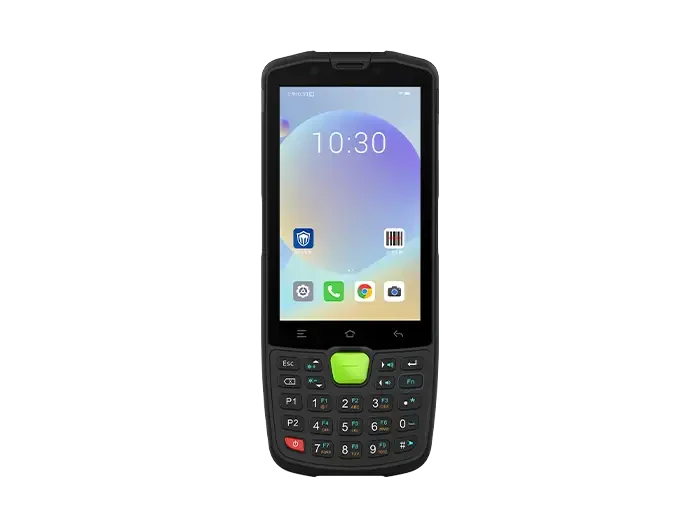
SEUIC (Dongji) / Keypad mobile terminals
AUTOID Q9 Pro
Keypad mobile terminal option for task-led warehouse applications.DevicesProject intake
Project intake form
Submit the form to request a shortlist, validation plan, sample discussion or scoped OEM feasibility review. Restricted files require a separately agreed transfer method.