UROVO / Label and receipt printers
K388 Pro: Label and receipt printers
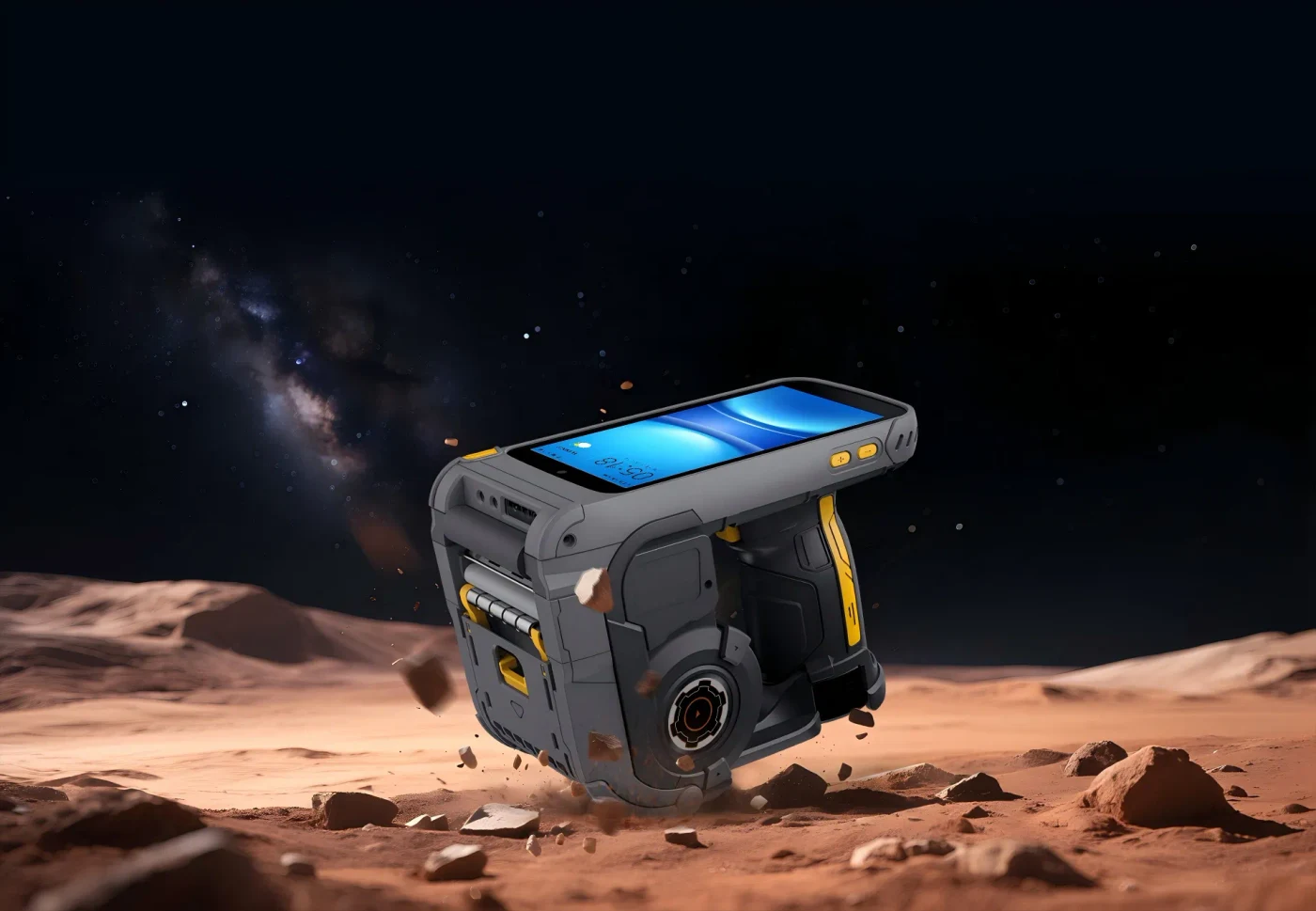
UROVO K388 Pro is a mobile direct-thermal labeling printer that combines scan, print and label workflows. The official page lists up to 58 mm print width, 120 mm/s printing, a hot-swap battery, 1D/2D capture and optional UHF RFID encoding; media and application behavior must be validated before deployment.
Suggested profiles: mobile labeling, scan-print-apply and logistics workflows
- Processor
- Octa-core, 2.4 GHz
- Memory
- 4 GB RAM / 64 GB ROM
- Display
- 5.5 inch display, 720 x 1440
- Scanning
- Professional scan engine for international standard 1D/2D barcodes
- Battery
- 32.4 Wh, 3000 mAh / 10.8 V rechargeable battery; hot swap and direct or battery-only charging
- Wireless
- Dual-band Wi-Fi with Wi-Fi 6E and 2x2 MU-MIMO listed
The exact model, regional configuration and commercial terms require project confirmation.
Browse by device capability
K388 Pro / Browse by device capability
UROVO is the primary established product resource, with SEUIC (Dongji) and selected platforms used where the capture method, form factor or deployment requirement needs another option. Published models follow an evidence, regional-configuration and RuggedLayer validation path.
Suggested profiles
- Logistics and warehouse labels applied at the point of work
- Small-lot or variable-SKU scan-print-apply operations
- RFID label workflows where encoding, printing and application are designed together
Browse by device capability
- A combined scan-print-label device for mobile logistics and warehouse work.
- The manufacturer lists narrow-width direct thermal printing at up to 120 mm/s.
- Optional UHF RFID encoding supports a defined RFID label workflow when the configuration is selected.
- Hot-swap power and a listed 1.5 m drop specification support mobile operations, subject to validation.
How a device enters the portfolio
Key specifications
Manufacturer-listed configuration; confirm the exact variant before ordering.
Platform
| Processor | Octa-core, 2.4 GHz |
|---|---|
| Operating system | Android |
| Memory | 4 GB RAM / 64 GB ROM |
| Display | 5.5 inch display, 720 x 1440 |
Data capture
| Scanning | Professional scan engine for international standard 1D/2D barcodes |
|---|---|
| RFID | Optional UHF RFID encoding is listed; encoding profile and regional configuration require confirmation |
Connectivity
| Wireless | Dual-band Wi-Fi with Wi-Fi 6E and 2x2 MU-MIMO listed |
|---|
Power and physical
| Battery | 32.4 Wh, 3000 mAh / 10.8 V rechargeable battery; hot swap and direct or battery-only charging |
|---|---|
| Dimensions and weight | 185 x 85 x 137 mm; 800 g |
Environmental
| Media roll | Supply roll diameter up to 60 mm; confirm media core, adhesive and tear workflow |
|---|---|
| Environmental | Operating -20 to +60 C; storage -40 to +70 C; 5-95% RH non-condensing; multiple 1.5 m drops listed |
Other configuration
| Printing | Direct thermal; print width up to 58 mm; paper thickness 50-180 micrometers; up to 120 mm/s |
|---|---|
| Print capacity | Up to 200 m per charge at 12.5% black coverage is a manufacturer reference |
A final shortlist depends on the application, scan or RFID workload, operating environment, country, deployment volume and support expectations.
A clear handoff at every layer
Five service layers for a more predictable device program.
RuggedLayer organizes access to multiple manufacturers into a consistent engagement model. Each layer has a defined input, deliverable and evidence boundary.
Service layers
- Confirm label width, roll diameter, adhesive, black-mark or gap sensing, print template and RFID encoding requirements.
- Test the exact scanner, printer, Wi-Fi, optional RFID and application queue behavior on representative media.
- Treat print capacity and production-rate statements as manufacturer references and measure them with the target label and route.
Deployment accessories
- Scope spare batteries, direct or battery-only charging, carry protection, media handling and a charging arrangement.
- Keep approved media, RFID inlay, encoding profile and print-template versions with the deployment record.
RuggedLayer Test Lab
Define a useful test, not a vague benchmark.
Tell us the labels, tags, application and operating conditions that matter.
- 01
Print representative labels with text, graphics and barcodes across the required media and darkness settings.
- 02
Test scanning, RFID encoding, Bluetooth or Wi-Fi host behavior, reconnect and offline queue recovery.
- 03
Measure battery, media and encoding consumption over a representative route before confirming fleet quantity.
Project intake
K388 Pro / Start with enough context to make the next step useful.
Choose the closest project intent and describe only non-confidential workflow, application and deployment requirements.