UROVO / Fixed RFID readers
FR1000: Fixed RFID readers
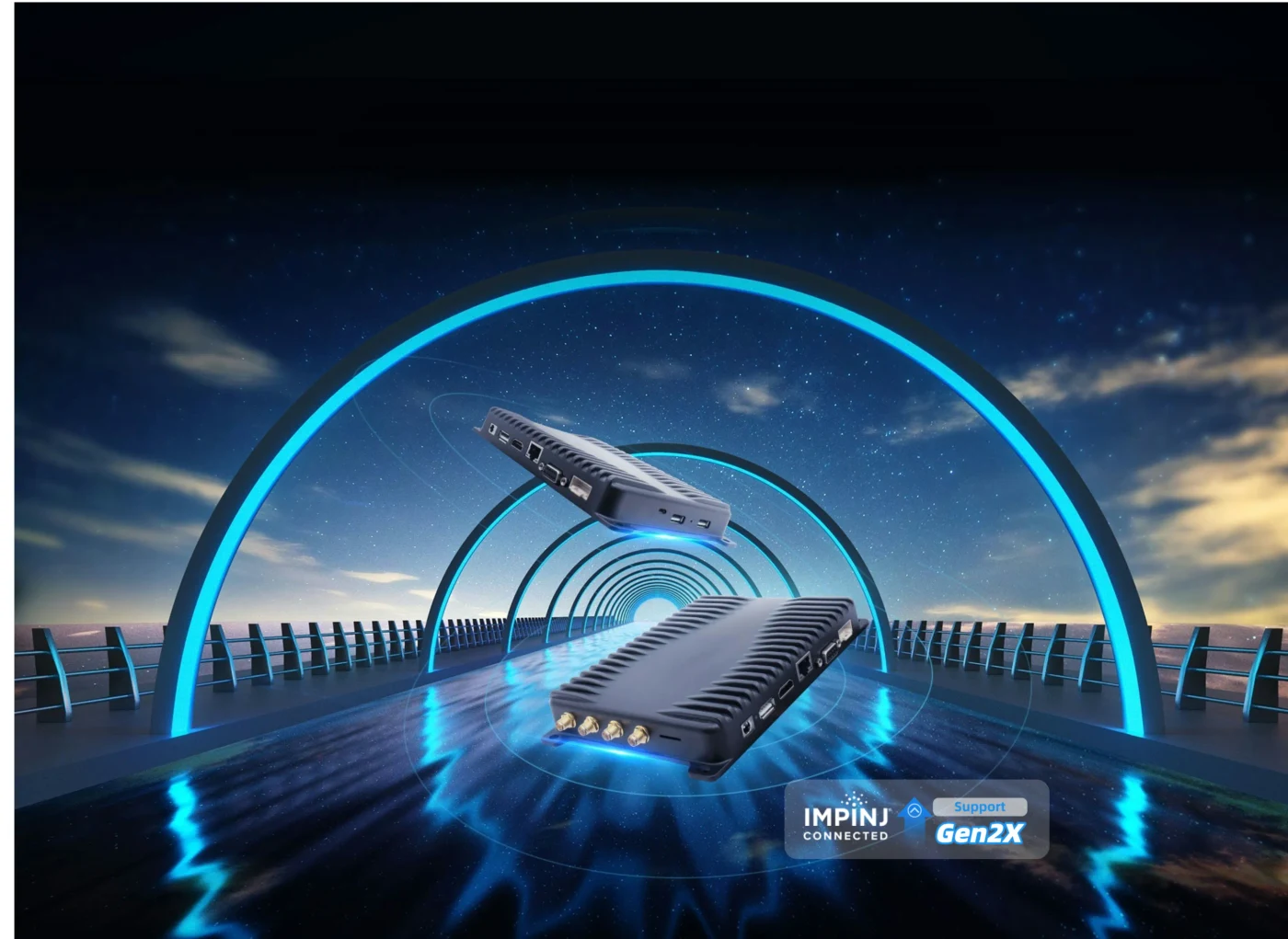
UROVO FR1000 is a fixed UHF RFID reader for portal, shelf, workstation and controlled item-visibility installations. The official page lists eight external antenna ports, Ethernet with PoE supply mode and industrial interfaces; read rate, RF behavior and installation coverage require a site and tag pilot.
Suggested profiles: fixed portal, shelf, workstation and multi-antenna UHF RFID deployments
- Processor
- 64-bit octa-core, 1.6 GHz
- Memory
- 4 GB RAM / 64 GB ROM
- RFID platform
- Integrated Impinj E710 and Self-Jammer Cancellation are named by the manufacturer; confirm the ordered reader configuration
- Communication
- Dual-band 2.4/5 GHz Wi-Fi; GPS plus GLONASS or GPS plus BeiDou listed
- Dimensions
- 180 x 128 x 28 mm
- Operating system
- Android
The exact model, regional configuration and commercial terms require project confirmation.
Browse by device capability
FR1000 / Browse by device capability
UROVO is the primary established product resource, with SEUIC (Dongji) and selected platforms used where the capture method, form factor or deployment requirement needs another option. Published models follow an evidence, regional-configuration and RuggedLayer validation path.
Suggested profiles
- Dock-door, portal and conveyor read zones
- Shelf, cabinet and workstation visibility
- Retail, library, archive, jewelry and asset installations with defined RF geometry
Browse by device capability
- A fixed reader platform for defined RFID zones and multi-antenna installations.
- Eight SMA antenna ports allow the site design to separate read zones and coverage areas.
- RJ45 with PoE supply mode, HDMI, RS232 and GPIO support installation integration.
- Impinj E710, SJC and throughput statements remain manufacturer references requiring validation.
How a device enters the portfolio
Key specifications
Manufacturer-listed configuration; confirm the exact variant before ordering.
Platform
| Processor | 64-bit octa-core, 1.6 GHz |
|---|---|
| Operating system | Android |
| Memory | 4 GB RAM / 64 GB ROM |
Data capture
| RFID platform | Integrated Impinj E710 and Self-Jammer Cancellation are named by the manufacturer; confirm the ordered reader configuration |
|---|---|
| RFID throughput | Up to 1300+ tags per second is a manufacturer reference, not a RuggedLayer test result |
Connectivity
| Communication | Dual-band 2.4/5 GHz Wi-Fi; GPS plus GLONASS or GPS plus BeiDou listed |
|---|
Power and physical
| Interfaces | DC jack, three USB interfaces, HDMI, RJ45 with PoE supply mode, RS232 and GPIO |
|---|---|
| Dimensions | 180 x 128 x 28 mm |
Environmental
| Environmental | Operating -30 to +70 C; storage -40 to +85 C; 5-95% RH non-condensing |
|---|
Other configuration
| Video output | 1920 x 1200 HD format video output |
|---|---|
| Antenna | Eight external SMA antenna interfaces; antenna type, cable and layout require site design |
A final shortlist depends on the application, scan or RFID workload, operating environment, country, deployment volume and support expectations.
A clear handoff at every layer
Five service layers for a more predictable device program.
RuggedLayer organizes access to multiple manufacturers into a consistent engagement model. Each layer has a defined input, deliverable and evidence boundary.
Service layers
- Design the antenna layout, cable routes, shielding, read boundary, power and network segmentation before procurement.
- Confirm regional frequency and output settings; do not infer compliance from the manufacturer feature page alone.
- Treat 1300+ tags per second and any read-range statement as manufacturer references rather than acceptance criteria.
Deployment accessories
- Scope antennas, SMA cables, brackets, PoE switching, enclosure, grounding and commissioning support for the site.
- Prepare representative tags, fixtures, shielding and adjacent equipment for the installation pilot.
RuggedLayer Test Lab
Define a useful test, not a vague benchmark.
Tell us the labels, tags, application and operating conditions that matter.
- 01
Map the target tag population, orientation, density, speed and material at every planned antenna zone.
- 02
Record missed, duplicate, stray and cross-zone reads over repeated sessions with the host application.
- 03
Freeze RF region, output, antenna layout, network, power, GPIO behavior and maintenance access in acceptance.
Project intake
FR1000 / Start with enough context to make the next step useful.
Choose the closest project intent and describe only non-confidential workflow, application and deployment requirements.