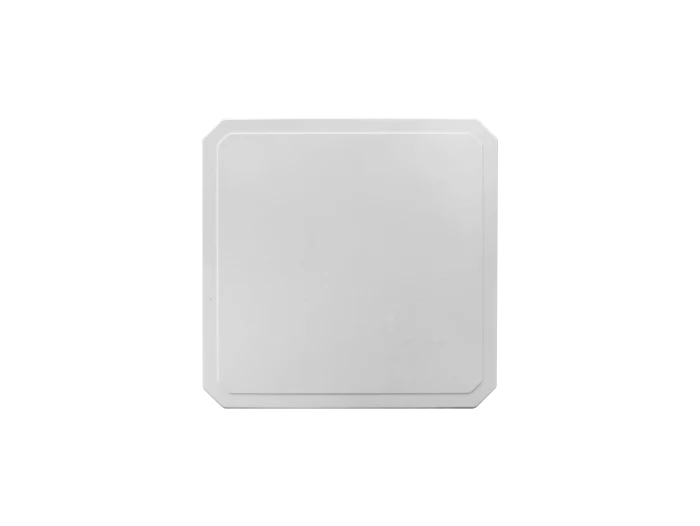
SEUIC (Dongji) / UHF RFID external antennas
NA-9C260: UHF RFID external antennas
SEUIC (Dongji) NA-9C260 is a high-gain circularly polarized UHF RFID external antenna for defined access-control, warehouse, logistics, retail and transport read zones. The exact model evidence lists 9 dBi gain, IP67 protection and pole-clamp mounting; reader pairing, feeder loss, tag mix and the installed read zone require validation.
Suggested profiles: fixed UHF RFID read zones for access control, warehouse, logistics, retail and transport workflows
- Protection
- IP67
- Dimensions and weight
- 261 x 261 x 30 mm; 1430 g
- Product type
- UHF RFID external antenna; reader electronics are not included
- Frequency
- US 902-928 MHz; EU 865-868 MHz
- Polarization
- Circular
- Gain
- 9 dBi
The exact model, regional configuration and commercial terms require project confirmation.
Browse by device capability
NA-9C260 / Browse by device capability
UROVO is the primary established product resource, with SEUIC (Dongji) and selected platforms used where the capture method, form factor or deployment requirement needs another option. Published models follow an evidence, regional-configuration and RuggedLayer validation path.
Suggested profiles
- Access-control and doorway read zones
- Warehouse, logistics and transport portals
- Retail or asset-tracking installations with a fixed antenna position
Browse by device capability
- A directional external-antenna format supports a defined fixed UHF RFID read zone.
- The 9 dBi gain, circular polarization and 68-degree beamwidth are model-specific manufacturer references.
- IP67 protection and a pole clamp support outdoor or industrial mounting scenarios when the complete installation is sealed correctly.
- The antenna must be paired with a compatible reader, feeder and regional RF plan; it is not a standalone RFID reader.
How a device enters the portfolio
Key specifications
Manufacturer-listed configuration; confirm the exact variant before ordering.
Platform
| Operating temperature | -40 to +85 C |
|---|
Power and physical
| Dimensions and weight | 261 x 261 x 30 mm; 1430 g |
|---|
Environmental
| Protection | IP67 |
|---|
Other configuration
| Product type | UHF RFID external antenna; reader electronics are not included |
|---|---|
| Frequency | US 902-928 MHz; EU 865-868 MHz |
| Polarization | Circular |
| Gain | 9 dBi |
| Beamwidth | Horizontal 68 degrees; vertical 68 degrees |
| VSWR and axial ratio | VSWR <= 1.5; axial ratio < 3 dB |
| Impedance and connector | 50 ohms; N-type connector with external thread and internal socket (female interface) |
| Materials | ABS off-white radome; aluminum radiator |
| Mounting | Pole clamp; maximum pole diameter 50 mm |
| Optional feeder cable, 8 m | ALSR195 cable, part number NF-ALSR195-T1N1-8 |
| Optional feeder cable, 4 m | RG58 cable, part number NF-RG58-T1N1-4 |
A final shortlist depends on the application, scan or RFID workload, operating environment, country, deployment volume and support expectations.
A clear handoff at every layer
Five service layers for a more predictable device program.
RuggedLayer organizes access to multiple manufacturers into a consistent engagement model. Each layer has a defined input, deliverable and evidence boundary.
Service layers
- Select the permitted US or EU frequency configuration, compatible reader output, polarization, feeder cable and connector sealing before quotation.
- Set antenna height, angle, spacing, shielding and cable route around the target tag orientation and the required read boundary.
- Confirm the pole diameter, wind or mechanical load, grounding, lightning protection and destination installation requirements with the site owner.
Deployment accessories
- Pair the antenna with the approved UHF RFID reader, one of the listed feeder cable options and the required N-type mating hardware.
- Scope pole clamps, brackets, weather sealing, cable protection, grounding and service access for the installed antenna position.
RuggedLayer Test Lab
Define a useful test, not a vague benchmark.
Tell us the labels, tags, application and operating conditions that matter.
- 01
Measure reads, missed reads, duplicate events and stray reads with the target reader, tags, feeder length, mounting angle and portal geometry.
- 02
Verify the regional RF profile, reader power, polarization, connector torque, cable loss, ingress protection and recovery after power or network interruption.
- 03
Freeze the exact antenna, reader, cable, mounting, tag population, RF settings and acceptance thresholds before a production rollout.
Project intake
NA-9C260 / Start with enough context to make the next step useful.
Choose the closest project intent and describe only non-confidential workflow, application and deployment requirements.