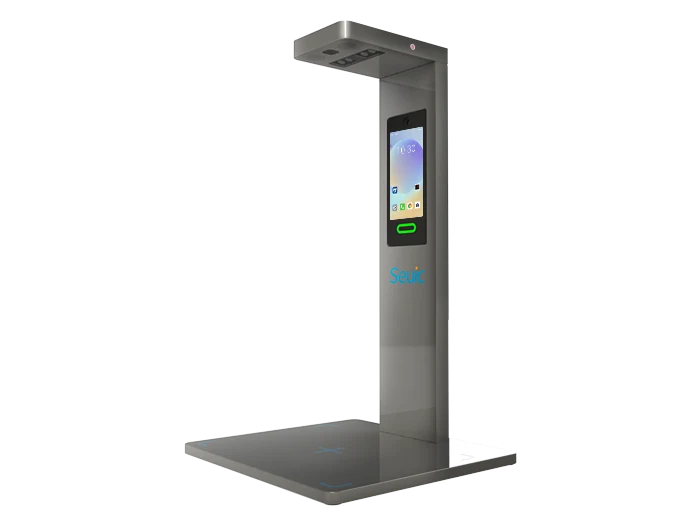
SEUIC (Dongji) / Document cameras
G14: Document cameras
SEUIC (Dongji) G14 is a large fixed barcode and document-processing station for parcel, pharmaceutical, food-traceability, manufacturing and warehouse workflows. The official page lists Android 14, 8 inch touch operation, 8 MP barcode imaging, 6 TOPS processing, Ethernet, HDMI and batch barcode positioning.
Suggested profiles: fixed parcel, document, traceability and warehouse entry or exit stations
- Operating system
- Android 14
- Display
- 8 inch capacitive touch display, 1280 x 800 pixels
- Barcode camera
- 8 MP, 3840 x 2160 pixels; Code 128 at 10 mil depth of field up to 450 mm is listed
- Power and physical
- 12 VDC / 3 A, 36 W maximum; 510 x 470 x 855 mm; less than 10 kg
- Communications
- Gigabit Ethernet, dual-band Wi-Fi, Bluetooth, USB 3.0, two USB 2.0 ports and HDMI
- Compute
- Eight-core 2.2 GHz processor with 6 TOPS processing reference
The exact model, regional configuration and commercial terms require project confirmation.
Browse by device capability
G14 / Browse by device capability
UROVO is the primary established product resource, with SEUIC (Dongji) and selected platforms used where the capture method, form factor or deployment requirement needs another option. Published models follow an evidence, regional-configuration and RuggedLayer validation path.
Suggested profiles
- Parcel intake and dispatch stations
- Pharmaceutical, food and manufacturing traceability
- Warehouse entry or exit points needing a wide barcode field
Browse by device capability
- A large fixed station can present work guidance and capture a wide parcel or document area.
- High-resolution barcode imaging, batch positioning, lighting and voice prompts target throughput-oriented stations.
- Ethernet, HDMI, USB and Bluetooth provide practical integration and peripheral paths.
- The manufacturer batch count and depth-of-field figures require target parcel, label, lighting and line testing.
How a device enters the portfolio
Key specifications
Manufacturer-listed configuration; confirm the exact variant before ordering.
Platform
| Operating system | Android 14 |
|---|---|
| Memory and storage | 4 GB RAM / 64 GB storage; optional TF expansion |
| Display | 8 inch capacitive touch display, 1280 x 800 pixels |
Data capture
| Barcode camera | 8 MP, 3840 x 2160 pixels; Code 128 at 10 mil depth of field up to 450 mm is listed |
|---|---|
| Cameras and lighting | 2 MP front camera; software-adjustable LED fill light and RGW status light |
Connectivity
| Communications | Gigabit Ethernet, dual-band Wi-Fi, Bluetooth, USB 3.0, two USB 2.0 ports and HDMI |
|---|
Power and physical
| Power and physical | 12 VDC / 3 A, 36 W maximum; 510 x 470 x 855 mm; less than 10 kg |
|---|
Environmental
| Environment | Operating -10 to +60 C; storage -30 to +70 C; 20-80% RH non-condensing |
|---|
Other configuration
| Compute | Eight-core 2.2 GHz processor with 6 TOPS processing reference |
|---|---|
| Capture field | Maximum barcode field of view at least 450 x 330 mm; source advertises 180-plus simultaneous barcodes as a manufacturer reference |
| Audio | Stereo dual speakers rated 5 W x 2 |
A final shortlist depends on the application, scan or RFID workload, operating environment, country, deployment volume and support expectations.
A clear handoff at every layer
Five service layers for a more predictable device program.
RuggedLayer organizes access to multiple manufacturers into a consistent engagement model. Each layer has a defined input, deliverable and evidence boundary.
Service layers
- Define the station footprint, camera height, barcode field, lighting, operator prompts, software and network design.
- Test mixed parcel sizes, dirty or incomplete labels, phone screens, simultaneous codes, glare and line speed.
- Confirm power, mounting, privacy and retention rules for the camera, optional weighing or measurement functions and any face imagery.
Deployment accessories
- Scope the 12 V power adapter, stand or cabinet, network cabling, HDMI or USB peripherals and protective station hardware.
- Keep the capture recipe, lighting settings, host API, exception process and maintenance access record with the handover.
RuggedLayer Test Lab
Define a useful test, not a vague benchmark.
Tell us the labels, tags, application and operating conditions that matter.
- 01
Measure first-pass reads, simultaneous-code behavior, field coverage and OCR or document workflow on representative items.
- 02
Test application, Ethernet, peripherals, lighting, audio, status GPIO, power recovery and data-retention behavior.
- 03
Freeze the station layout, camera settings, software image, firmware, peripherals and acceptance thresholds.
Project intake
G14 / Start with enough context to make the next step useful.
Choose the closest project intent and describe only non-confidential workflow, application and deployment requirements.