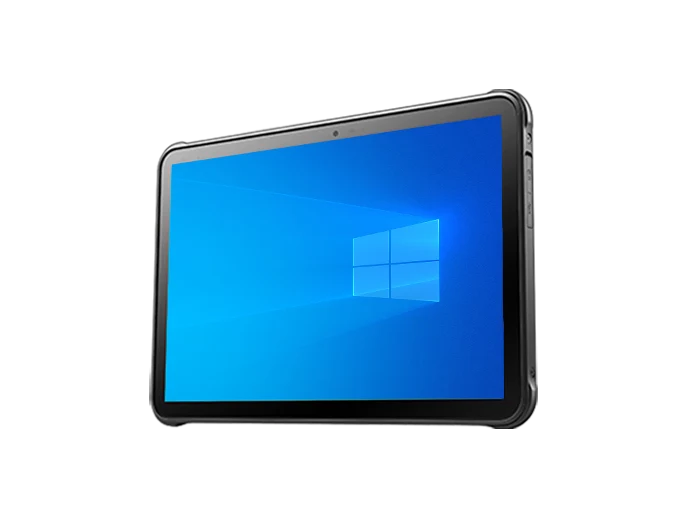
SEUIC (Dongji) / Industrial tablets
AUTOID Pad Air Windows: Industrial tablets
SEUIC (Dongji) AUTOID Pad Air-(Win) is a rugged Windows tablet for warehouse, field and industrial applications that need desktop-compatible software or peripherals. The official page lists a 10.1 inch FHD display, Intel Core m3 processing, 8 GB/128 GB baseline storage, 2D scanning, USB 3.0 and IP65 protection.
Suggested profiles: Windows warehouse, field, industrial and mobile workstation applications
- Processor
- Intel Core m3-8100Y, 2 cores/4 threads, up to 3.4 GHz; Intel UHD 615 graphics
- Display
- 10.1 inch FHD, 1920 x 1200 pixels, full-angle display
- Scanning
- 2D barcode scanner
- Battery
- Non-removable 7.7 V battery; 4920 mAh rated and 5070 mAh typical capacity listed
- Wireless
- Dual-band 802.11 a/b/g/n/ac Wi-Fi with 2x2 MIMO; channels vary by region
- Dimensions
- 258 x 173 x 10.8 mm; 12 mm at the thicker section
The exact model, regional configuration and commercial terms require project confirmation.
Browse by device capability
AUTOID Pad Air Windows / Browse by device capability
UROVO is the primary established product resource, with SEUIC (Dongji) and selected platforms used where the capture method, form factor or deployment requirement needs another option. Published models follow an evidence, regional-configuration and RuggedLayer validation path.
Suggested profiles
- Warehouse and production dashboards
- Field inspection and work-instruction applications
- Mobile workstations that require Windows software or peripherals
Browse by device capability
- Windows platform supports existing desktop-oriented applications and peripherals in mobile settings.
- A 10.1 inch FHD display, USB 3.0, DisplayPort and bottom I/O suit larger-screen work instructions and stations.
- Integrated 2D scanning and IP65 protection reduce the need for a separate capture device in defined workflows.
- The non-removable battery and Windows image lifecycle must be planned before fleet deployment.
How a device enters the portfolio
Key specifications
Manufacturer-listed configuration; confirm the exact variant before ordering.
Platform
| Processor | Intel Core m3-8100Y, 2 cores/4 threads, up to 3.4 GHz; Intel UHD 615 graphics |
|---|---|
| Operating system | Windows 10 IoT Enterprise 64-bit; upgrade to Windows 11 IoT listed |
| Memory and storage | 8 GB LPDDR3 / 128 GB SSD; 256 GB option listed |
| Display | 10.1 inch FHD, 1920 x 1200 pixels, full-angle display |
| Touch | 10-point capacitive touch with water-touch support |
Data capture
| Scanning | 2D barcode scanner |
|---|---|
| Camera | 2 MP fixed-focus front camera; 8 MP autofocus rear camera with flashlight |
Connectivity
| Wireless | Dual-band 802.11 a/b/g/n/ac Wi-Fi with 2x2 MIMO; channels vary by region |
|---|
Power and physical
| Dimensions | 258 x 173 x 10.8 mm; 12 mm at the thicker section |
|---|---|
| Weight | 690 g with standard battery |
| Battery | Non-removable 7.7 V battery; 4920 mAh rated and 5070 mAh typical capacity listed |
| Interfaces | USB Type-C with USB 3.0, DisplayPort and headset support; bottom USB 2.0, DC input, 5 V output and I/O |
Environmental
| Environment | Operating -10 to +50 C; storage -20 to +60 C with battery; 5-95% RH non-condensing |
|---|
Other configuration
| Durability | IP65; manufacturer lists 1.2 m drops to concrete at room temperature |
|---|---|
| Controls and audio | Power and volume keys; stereo speakers, dual microphones and Type-C digital headset support |
| Standard accessories | PD adapter, dual Type-C data cable and hand strap listed; cradle, cover, shoulder strap and fixed bracket are additional options |
A final shortlist depends on the application, scan or RFID workload, operating environment, country, deployment volume and support expectations.
A clear handoff at every layer
Five service layers for a more predictable device program.
RuggedLayer organizes access to multiple manufacturers into a consistent engagement model. Each layer has a defined input, deliverable and evidence boundary.
Service layers
- Confirm the Windows image, licensing, storage option, scanner, docking, display output and peripheral compatibility.
- Test the application, USB/DisplayPort devices, Wi-Fi roaming, battery charging, screen visibility and glove or water touch.
- Plan fixed mounting, power, thermal behavior, update policy, recovery media and replacement strategy around the non-removable battery.
Deployment accessories
- Scope the multifunction cradle, silicone cover, screen protection, shoulder strap, fixed bracket and docking hardware.
- Provide the PD power, data cabling, Windows recovery plan and approved peripherals as part of the deployment package.
RuggedLayer Test Lab
Define a useful test, not a vague benchmark.
Tell us the labels, tags, application and operating conditions that matter.
- 01
Run the target Windows application with all required drivers, scanners, USB devices, displays and offline behavior.
- 02
Test Wi-Fi coverage, charging, battery endurance, mounting vibration, touch conditions and thermal limits at the site.
- 03
Freeze the Windows image, storage, firmware, peripheral set, power design, recovery process and acceptance record.
Project intake
AUTOID Pad Air Windows / Start with enough context to make the next step useful.
Choose the closest project intent and describe only non-confidential workflow, application and deployment requirements.