Decision rule
Select DT50P Lite when a single integrated device and one charging/application lifecycle simplify operations. Select RFG91 when a validated compatible host already exists or separating the host and RFID reader lifecycle creates real value. Pilot both architectures with representative tags and operators.
One device versus two managed components
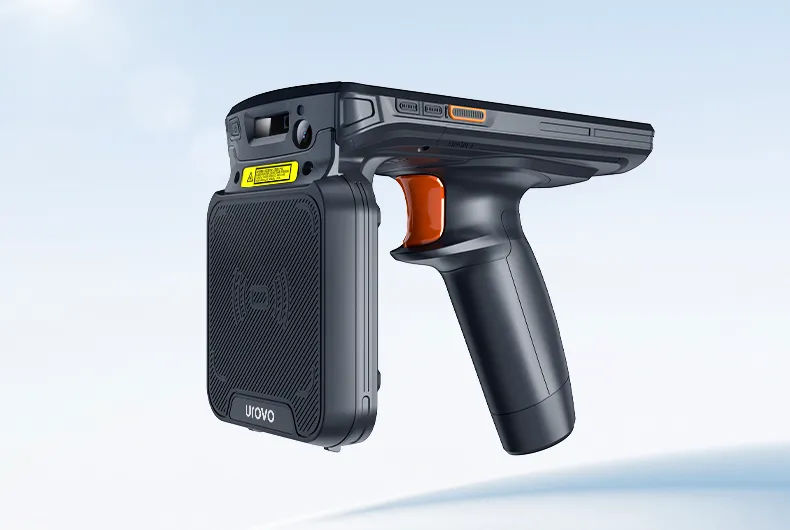
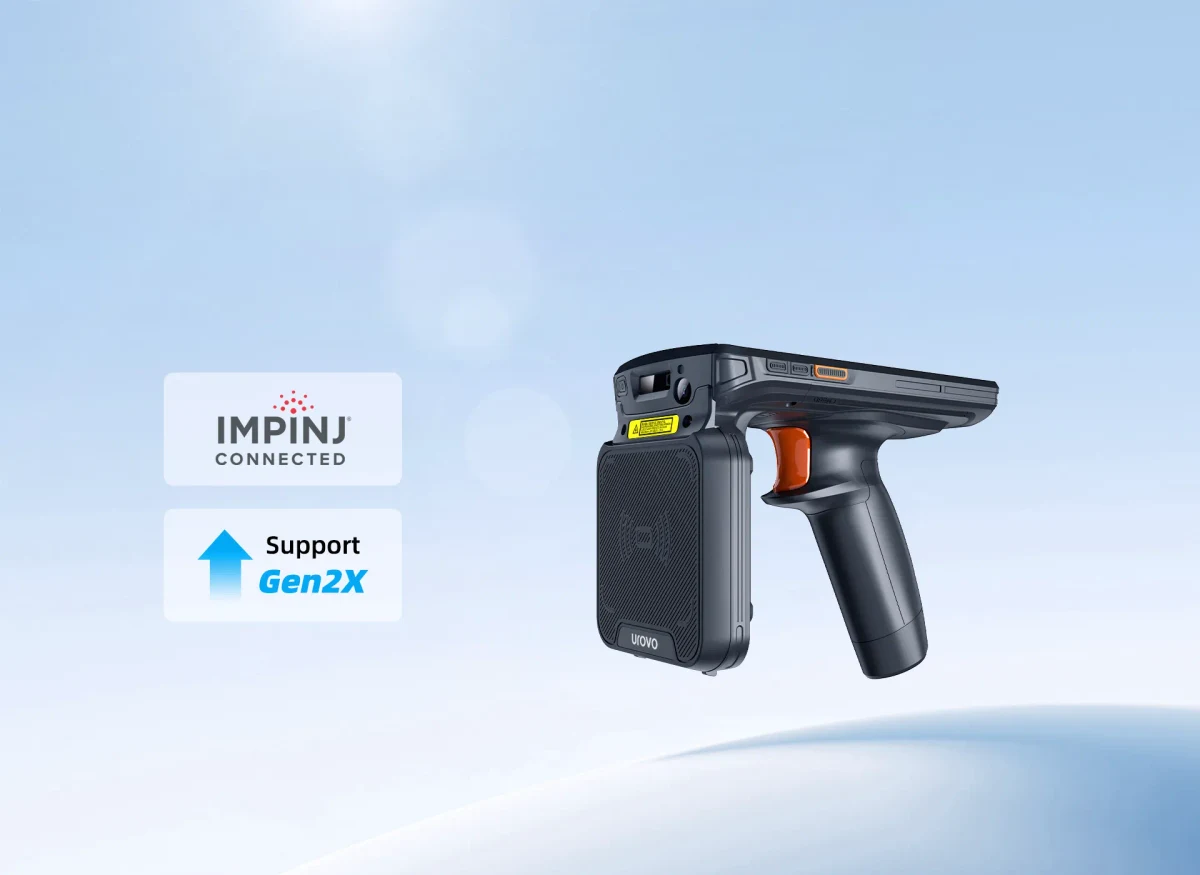
DT50P Lite combines the Android host, barcode capture and UHF reader. This can reduce pairing and mounting complexity, but the entire unit follows one replacement cycle.
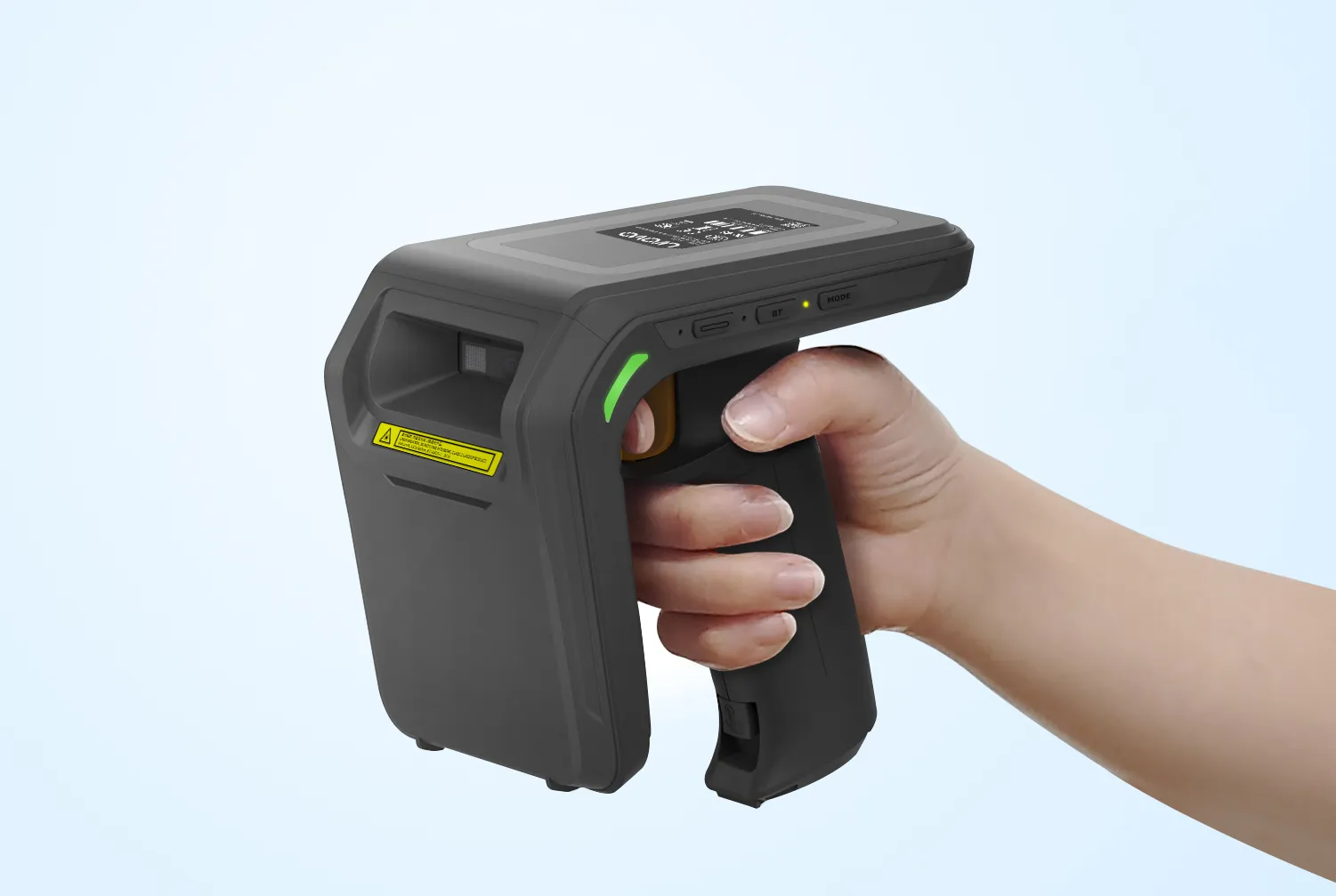
RFG91 separates the reader from the host. That can preserve a host investment, but compatibility, physical fit, connection recovery, battery visibility and two-part asset control become project requirements.
- Count managed batteries and chargers
- Define host-reader pairing ownership
- Test disconnect and reconnection
- Document replacement combinations
RF performance comes from the complete read zone
The manufacturer lists 15 m+ range and 1300+ tags per second for these model records. Those figures are not a promise for a shelf, pallet or asset population.
Tag chip, antenna, material, orientation, density, interference, reader power, operator sweep and filtering logic all affect useful capture. Build the pilot around false reads and missed reads, not maximum range alone.
- Representative tags on real materials
- Known tag population and ground truth
- Near-zone and adjacent-zone leakage checks
- Power and session settings recorded
Ergonomics and shift design
An integrated handheld has a stable center of mass. A host-and-sled combination changes balance with the selected host and mount. Compare trigger reach, wrist angle, display visibility and one-handed exception handling.
Measure battery behavior for both the reader and host. A reader that lasts a shift is insufficient if the paired host does not.
- Total working mass and balance
- Trigger and screen interaction
- Holster and cart placement
- Two-battery charging plan
Software and lifecycle validation
The application should expose reader state, region settings, power, inventory start and stop, tag filtering, duplicate handling and recovery errors. Confirm which functions are available for the exact device and SDK combination.
For a sled, explicitly test supported hosts, OS updates, mount tolerances and reconnection after sleep or battery replacement.
- SDK and sample build recorded
- Region and power locked by policy
- Offline results and retry behavior
- Host and reader update matrix
Integrated handheld versus sled
Architecture trade-offs to validate in the pilot.
| Criterion | DT50P Lite | RFG91 |
|---|---|---|
| System shape | Integrated Android + RFID + barcode | RFID sled + compatible host |
| Lifecycle | One combined replacement cycle | Host and reader can change separately |
| Integration risk | Device-specific application validation | Host, mount, connection and application validation |
| Battery plan | 6500 mAh removable listed | 5000 mAh standard / 6700 mAh optional plus host |
| Best fit | New, standardized RFID fleet | Validated host fleet with upgrade rationale |
RFID architecture pilot checklist
Test the whole system under the same ground truth.
- 01
Exact regional RFID configurations confirmed
- 02
Compatible RFG91 host and mount identified
- 03
Tag population and expected reads known
- 04
Adjacent-zone false reads measured
- 05
Inventory filters and duplicate rules fixed
- 06
Reader and host battery recorded
- 07
Disconnect and sleep recovery tested
- 08
Operator ergonomics reviewed
Frequently asked questions
Does RFG91 work with any Android phone?
No universal compatibility is claimed. The exact host model, OS, physical mount, connection behavior and application interface must be validated.
Will either reader achieve 15 metres in our warehouse?
The 15 m+ figure is manufacturer-listed. Actual useful range depends on regional settings, tag, material, orientation, RF environment and workflow acceptance criteria.
Is an integrated RFID handheld easier to deploy?
It often reduces host pairing and two-device management, but application, RF, charging, ergonomics and regional configuration still require validation.
Evidence and limitations
Manufacturer-supported model facts / RFID performance not tested by RuggedLayer
The guide does not infer local radio approval, universal host compatibility or achieved range and rate.
Reviewed: 2026-08-10
- UROVO DT50P Lite model record verified 2026-08-02
- UROVO RFG91 model record verified 2026-08-02