Pantaloons India / Apparel retail and mobile POS
Mobile checkout and live inventory synchronization at Pantaloons India
Customer deployment reference / UROVO hardware platform
Pantaloons India used i9000S handheld smart POS terminals with retail software to combine item lookup, checkout, payment, tax and discount calculation, transaction records, stock updates and customer service away from a fixed counter.

Case Studies
Design the mobile workflow before locking the device SKU.
Rapid store expansion increased the need for a faster operating model that could support clothing sales, payment collection, inventory visibility and more personalized service without concentrating every transaction at a fixed checkout counter.
Workflow solutions
Priority workflows
The i9000S handheld smart POS connects the store application and payment function in one mobile workflow. The documented software scope covers item information, costs and expenses, payment methods, stock, transaction records, employee time clocking, tax and discount calculation. Completed sales synchronize with inventory and trigger low-stock reminders for replenishment.
DevicesUROVO i9000S handheld smart POS
Solution planning sequence
Solution planning sequence
A reliable deployment combines the right capture method, application behavior, connectivity, ergonomics, charging and replacement process. Solution design keeps those choices connected.
01 / Start the assisted sale
Identify the associate, customer context and items from anywhere in the store.
Moves product lookup and selling activity away from a fixed checkout queue.
02 / Price the basket
Apply item data, tax, discount and promotion rules in the retail application.
Keeps pricing decisions consistent with the store system at the point of interaction.
03 / Take payment
Complete the supported payment method through the handheld POS workflow.
Allows the sales and payment event to finish on one managed device.
04 / Update stock
Write the transaction to inventory and evaluate the resulting stock level.
Prevents completed sales from remaining disconnected from replenishment decisions.
05 / Trigger follow-up
Create low-stock reminders and retain transaction data for customer and store analysis.
Links checkout speed to downstream availability, queue and merchandising decisions.
Case Studies
Outcome-led scope
Solution pages will recommend capabilities first. Exact models remain replaceable until testing confirms the best fit.
Checkout workflow
Mobile processing reduces handwritten work and supports faster store sales activity.
Inventory response
Sales synchronize with stock records so low-stock reminders can trigger replenishment.
Store decisions
Current transaction data supports faster operating and merchandising decisions.
Customer flow
The documented result includes faster checkout, queue management and cross-sell or upsell execution.
Engineering and supply services
Five service layers for a more predictable device program.
RuggedLayer organizes access to multiple manufacturers into a consistent engagement model. Each layer has a defined input, deliverable and evidence boundary. Hardware margin, validation, staging, project management and lifecycle support are distinct value streams. Scope and fees depend on the project.
Select
Sales associates, cashiers, store supervisors, inventory teams and retail application support.
Validate
Item barcode, basket, price, discount, tax, payment, receipt, transaction and inventory events on one handheld POS.
Deploy
Retail POS, payment gateway, product and price service, inventory, promotions, customer records and device management.
Commercial boundaries
Customer-facing speed, payment security, queue peaks, shared devices, store Wi-Fi and strict transaction recovery.
A clear handoff at every layer
Five service layers for a more predictable device program.
Hardware margin, validation, staging, project management and lifecycle support are distinct value streams. Scope and fees depend on the project.
Store workflow application
Role-based flows cover receiving, shelf work, item lookup, counting, replenishment, transfers or mobile checkout without exposing unnecessary back-office functions.
Commercial boundariesRuggedLayer translates store tasks into device and validation requirements; the retailer or ISV owns price, promotion, payment and inventory rules.
Store device layer
Shared handhelds or mobile POS units combine the required barcode, RFID, payment and camera functions with practical holsters, charging and handoff controls.
Commercial boundariesRuggedLayer selects and configures the hardware platform, accessories, capture settings and managed application profile.
Store connectivity
Store Wi-Fi or cellular service synchronizes transactions, inventory events and device status, with queued work for short network interruptions.
Commercial boundariesRuggedLayer proves roaming, reconnect and application recovery on the device; store network remediation is separately scoped.
Retail systems
POS, ERP, WMS, inventory, customer and device-management systems retain the authoritative product, stock, transaction and policy records.
Commercial boundariesRuggedLayer validates the agreed integration points and handover package while the retailer controls production data and commercial logic.
Publication gate
Comparable device evidence with method, version and limitations.
The Test Lab defines what must be recorded before a manufacturer reference or RuggedLayer observation can support a purchase or deployment decision.
Publication gate
- 01
Price, promotion or tax returned by the device differs from the central retail service.
Use the authoritative server result, block unsupported manual override and require supervisor approval for the defined exception path.
- 02
Payment status is uncertain after a timeout or network loss.
Query by the original transaction identifier before any retry and prevent a duplicate charge or duplicate sale.
- 03
The sale completes but inventory synchronization is pending.
Retain the linked inventory event, show the pending state to operations and retry without recreating the transaction.
How to read the references
Transaction integrity
Approved, declined, canceled, timed-out and reversed payments produce one correct retail and payment record.
Pricing
Representative items, tax, discounts and promotions match the authoritative store calculation.
Inventory sync
Completed sales update stock once and create the correct low-stock or replenishment response.
Customer flow
A trained associate completes the target basket and receipt path within the agreed peak-hour service time.
A clear handoff at every layer
Choose the first service layer.
A short requirement review will identify whether selection, validation or customization comes first.
01 / Discover
A store-task map covering user roles, item and tag types, payment boundary, stock rules, device sharing and support ownership.
02 / Store validation
Configured samples tested on real shelves, racks, labels, applications, peripherals, Wi-Fi and daily charging routines.
03 / Pilot stores
A small representative store group with baseline timings, exception logs, associate feedback and a documented go/no-go review.
04 / Wave deployment
A repeatable store kit, enrollment profile, installation checklist, training package, replacement pool and support route.
Enterprise device portfolio
Mobile computers, barcode scanners and RFID readers by workflow.
A final shortlist depends on the application, scan or RFID workload, operating environment, country, deployment volume and support expectations.
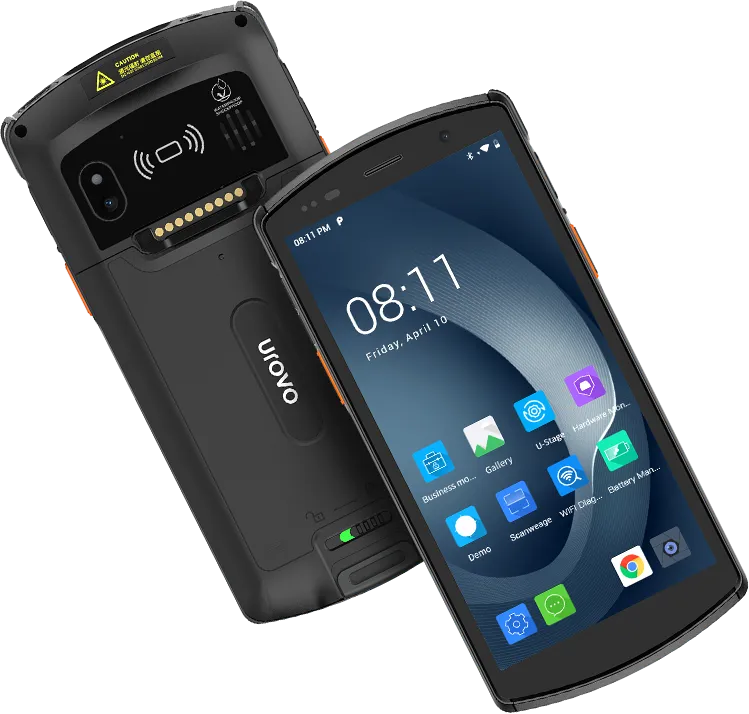
UROVO / Rugged handheld computer
DT50
General-purpose handheld with a replaceable-battery option for mixed store work.Devices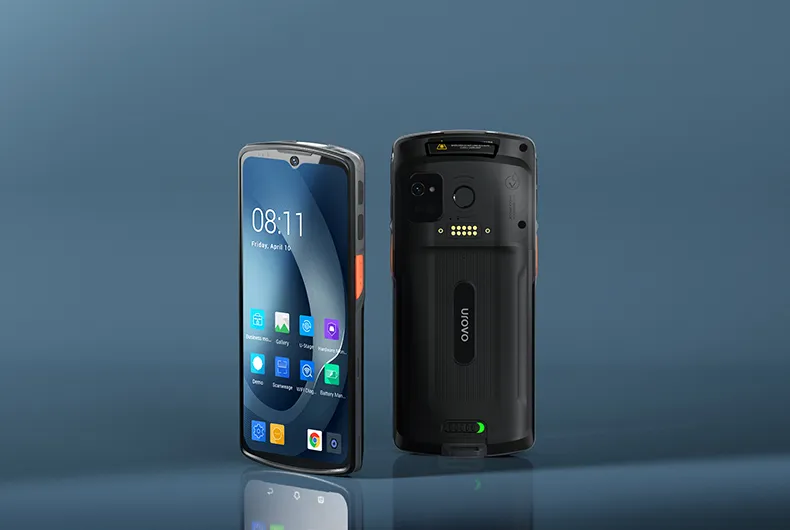
UROVO / Enterprise mobile computer
DT66
Modern full-touch platform for app-first retail workflows.Devices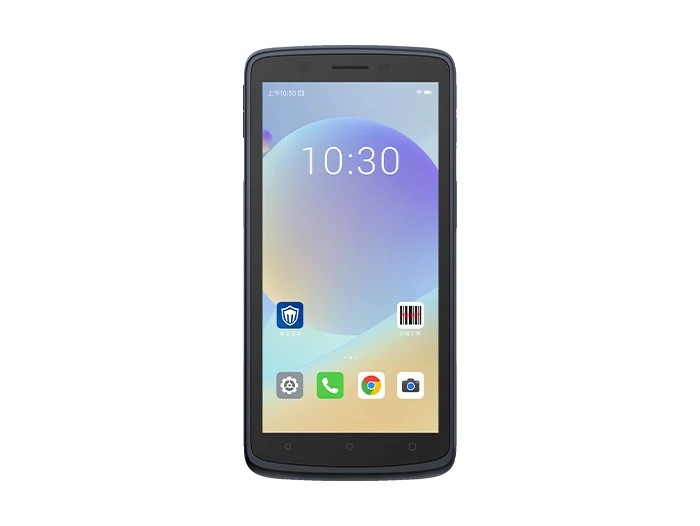
SEUIC (Dongji) / Touch mobile terminals
CRUISE2
Full-touch mobile terminal option for inventory and store applications.DevicesProject intake
Project intake form
Submit the form to request a shortlist, validation plan, sample discussion or scoped OEM feasibility review. Restricted files require a separately agreed transfer method.