Hainan Airlines / Aviation safety equipment
Minute-level life-vest inspection for Hainan Airlines
Customer deployment reference / SEUIC (Dongji) hardware platform
Hainan Airlines used an AUTOID UTouch 2-20 RFID handheld to digitize life-vest counting, inspection, expiry monitoring and lifecycle records across aircraft.

Case Studies
Design the mobile workflow before locking the device SKU.
Manual inspection of one aircraft took 30 to 60 minutes and created risks of missed checks, incorrect records and weak expiry visibility.
Workflow solutions
Priority workflows
The RFID workflow batches life-vest identification onboard, links inspection events to backend systems and keeps issuance and lifecycle records traceable.
DevicesSEUIC AUTOID UTouch 2-20 RFID handheld
Solution planning sequence
Solution planning sequence
A reliable deployment combines the right capture method, application behavior, connectivity, ergonomics, charging and replacement process. Solution design keeps those choices connected.
01 / Identify equipment
Read life-vest RFID tags in the aircraft environment.
Associates each item with the correct inspection and lifecycle record.
02 / Batch the inspection
Count and inspect the assigned equipment set in one RFID pass.
Reduces the time spent finding and manually recording individual life vests.
03 / Check lifecycle status
Link inspection events to expiry and monitoring information.
Makes exceptions visible before a compliance check becomes a departure risk.
04 / Preserve the audit record
Synchronize inspection results to the back-office record.
Provides traceable evidence for the equipment issue and inspection cycle.
Case Studies
Outcome-led scope
Solution pages will recommend capabilities first. Exact models remain replaceable until testing confirms the best fit.
Inspection time
Reduced from 30 to 60 minutes to under 5 minutes per aircraft.
Operational efficiency
More than 200% improvement against the manual process.
Compliance workflow
End-to-end digital management of life-vest monitoring and inspection records.
Engineering and supply services
Five service layers for a more predictable device program.
RuggedLayer organizes access to multiple manufacturers into a consistent engagement model. Each layer has a defined input, deliverable and evidence boundary. Hardware margin, validation, staging, project management and lifecycle support are distinct value streams. Scope and fees depend on the project.
Select
Aircraft safety-equipment inspectors, maintenance supervisors and asset-record administrators.
Validate
Batch UHF RFID reads tied to aircraft, cabin zone, life-vest identity, inspection result and expiry status.
Deploy
Inspection application, aircraft and asset registry, expiry rules, maintenance records, audit reporting and managed identity.
Commercial boundaries
Metal-rich cabin geometry, tightly packed equipment, strict aircraft context, offline work and safety-record traceability.
A clear handoff at every layer
Five service layers for a more predictable device program.
Hardware margin, validation, staging, project management and lifecycle support are distinct value streams. Scope and fees depend on the project.
RFID workflow application
The application opens a defined read session for a person, asset set, location or custody task and requires review before committing exceptions.
Commercial boundariesRuggedLayer designs the read workflow and validates application behavior; the customer system owns identity, entitlement and asset status rules.
Tags, readers and read zones
Tag type, placement, reader power, antenna behavior and operator movement are tuned together for the material and physical read zone.
Commercial boundariesRuggedLayer scopes the reader and tag validation, configures device profiles and documents the approved operating method.
Event filtering and transport
The device or application filters duplicate and stray reads, retains offline events and sends accepted observations through a controlled API.
Commercial boundariesRuggedLayer validates device-side filtering and synchronization; production middleware and security policies remain under customer control.
Asset or operations platform
The system of record stores tag identity, business object, location, custody, lifecycle status, timestamp and approved exception history.
Commercial boundariesRuggedLayer reviews the event contract and reconciliation path; the platform owner approves status changes and retention rules.
Publication gate
Comparable device evidence with method, version and limitations.
The Test Lab defines what must be recorded before a manufacturer reference or RuggedLayer observation can support a purchase or deployment decision.
Publication gate
- 01
The read set contains a life vest assigned to another aircraft or zone.
Exclude it from completion, identify the unexpected assignment and require physical resolution before sign-off.
- 02
An expected tag is missing or unreadable.
Open an item-level physical check and barcode or serial fallback; retain the missing status until the inspector resolves it.
- 03
An item is expired or inside the configured warning window.
Block a clean inspection result and create the approved replacement or maintenance action with an audit timestamp.
How to read the references
Read coverage
The approved cabin-zone procedure detects the expected tagged set without accepting items from adjacent aircraft or zones.
Inspection timing
The complete count, exception review and signed submission meet the operational turnaround target.
Lifecycle rules
Expired, near-expiry, missing and reassigned equipment create the correct maintenance status and evidence.
Auditability
Every completed inspection retains aircraft, zone, inspector, device, time, expected set and resolved exceptions.
A clear handoff at every layer
Choose the first service layer.
A short requirement review will identify whether selection, validation or customization comes first.
01 / Survey and design
A physical read-zone survey covering tag population, materials, placement, nearby reads, user motion and authoritative status rules.
02 / Tag and reader validation
Representative tagged items tested for read rate, leakage, orientation, power level, ergonomics and synchronization.
03 / Controlled workflow pilot
A bounded asset set, route or location with reconciliation rules, baseline timing and explicit false-read handling.
04 / Scale with controls
Locked reader profiles, tag standards, site calibration, training, audit reports, spares and periodic revalidation ownership.
Enterprise device portfolio
Mobile computers, barcode scanners and RFID readers by workflow.
A final shortlist depends on the application, scan or RFID workload, operating environment, country, deployment volume and support expectations.
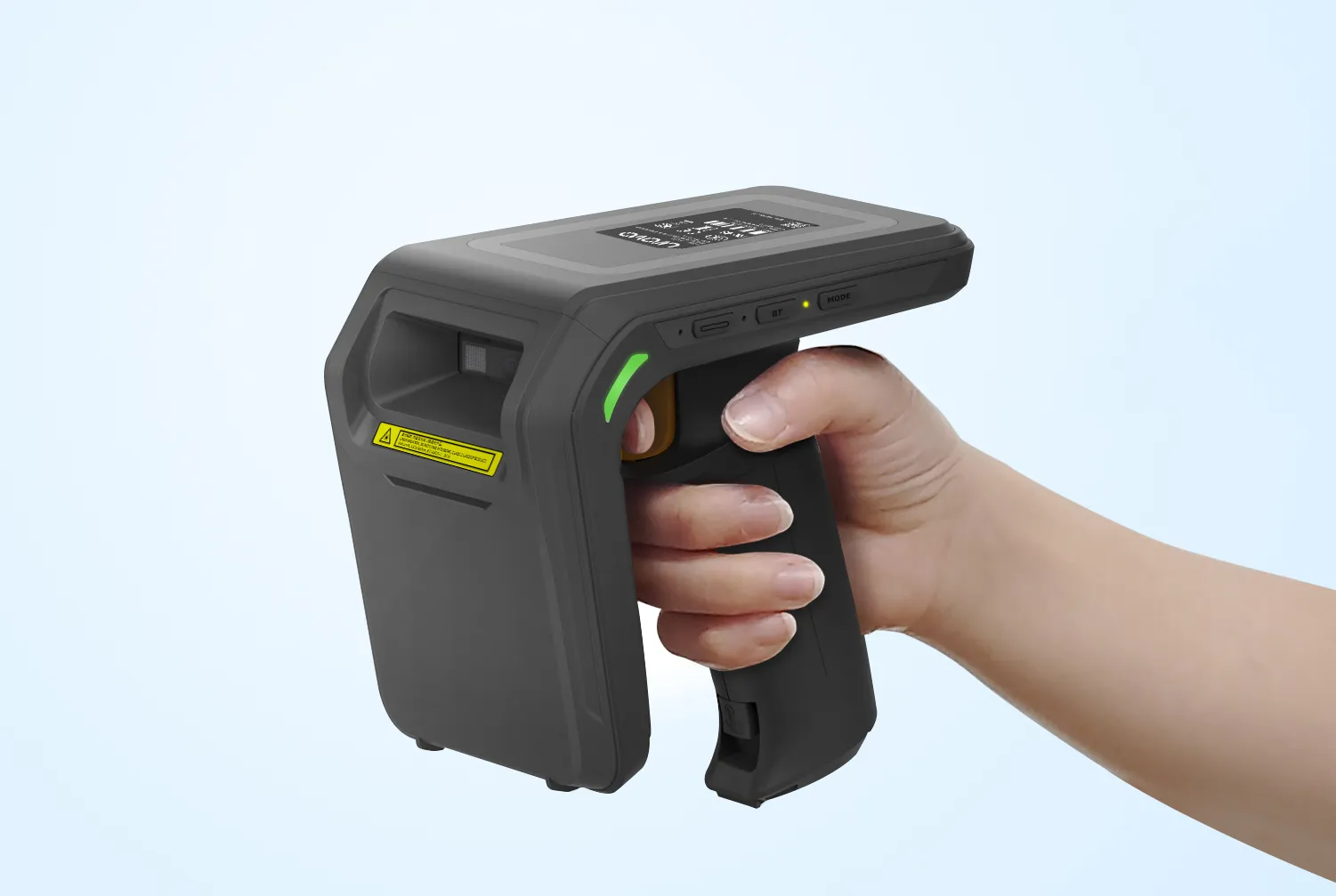
UROVO / UHF RFID sled
RFG91
UHF RFID sled for adding RFID capability to compatible mobile hosts.Devices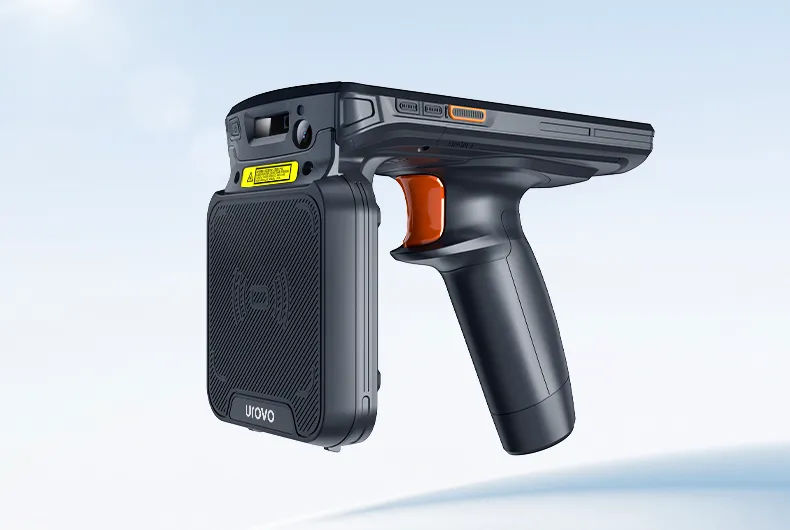
UROVO / UHF RFID handheld reader
DT50P Lite
Integrated handheld profile for mobile RFID inventory workflows.Devices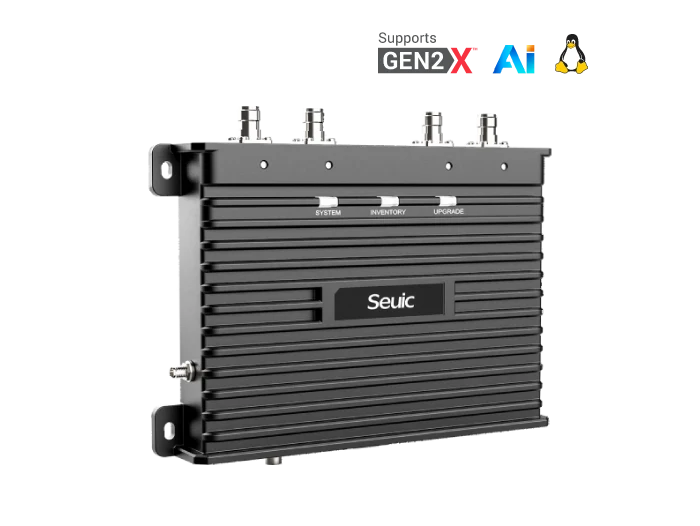
SEUIC (Dongji) / Fixed RFID readers
AUTOID UF40 Linux AI
Fixed-reader option for controlled RFID zones and infrastructure projects.DevicesProject intake
Project intake form
Submit the form to request a shortlist, validation plan, sample discussion or scoped OEM feasibility review. Restricted files require a separately agreed transfer method.