ExxonMobil Shanghai Technology Center / Employee transportation
RFID employee verification and route analytics for ExxonMobil shuttles
Customer deployment reference / SEUIC (Dongji) hardware platform
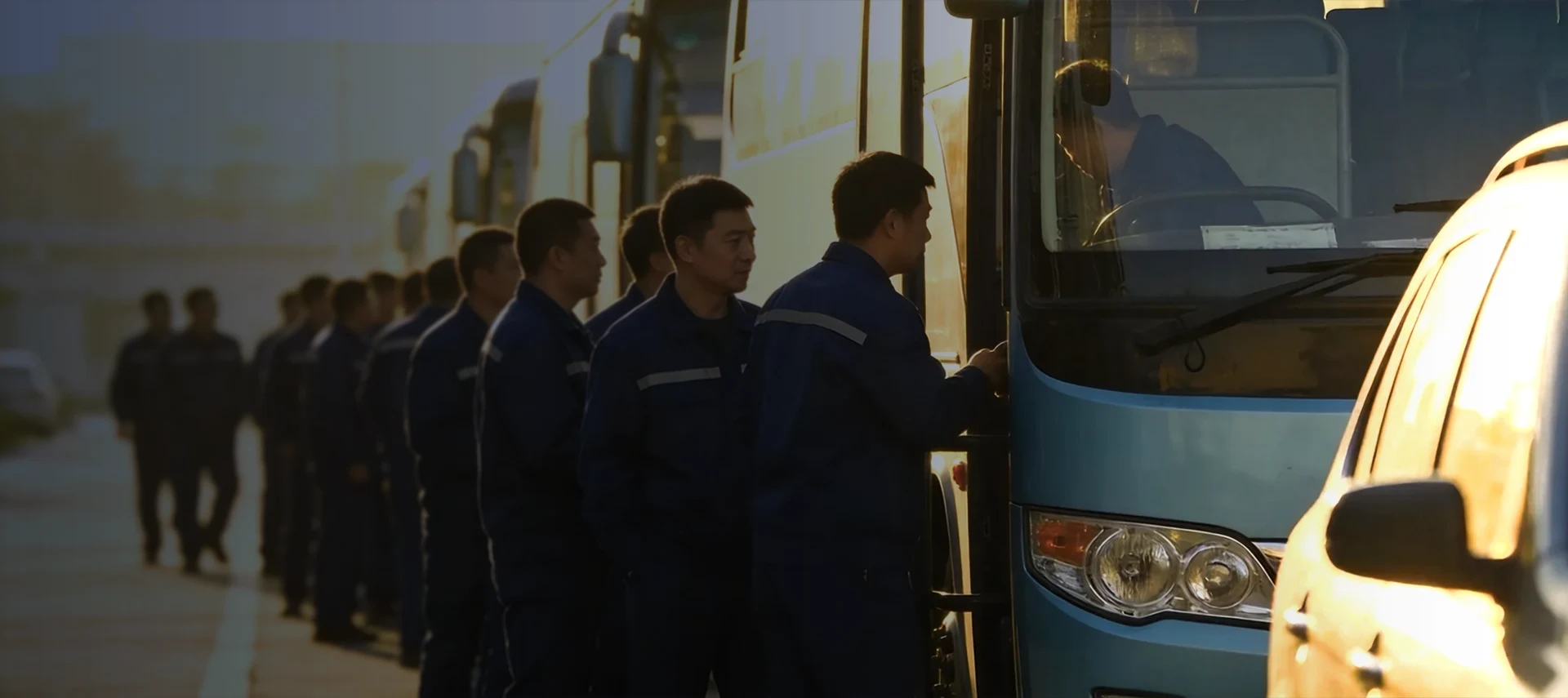
ExxonMobil Shanghai Technology Center used UHF RFID employee badges, vehicle-mounted handheld readers, 4G synchronization with offline caching and a management platform to control shuttle access and analyze demand across more than 20 routes.
Case Studies
Design the mobile workflow before locking the device SKU.
The public case describes more than 1,000 employees and over 20 shuttle routes. Manual boarding lacked reliable identity verification and trip records, some routes had empty-seat rates above 40%, and peak-hour congestion could delay departures.
Workflow solutions
Priority workflows
Each employee badge carries a unique passive UHF RFID identifier linked to access permission. An AUTOID UTouch 2-S6+3 reader on each bus verifies boarding, caches events when connectivity is unavailable and sends them over 4G to a platform for employee records, trip queries, passenger-flow analytics, vehicle monitoring and exception alerts.
DevicesSEUIC AUTOID UTouch 2-S6+3 UHF RFID handheld reader
Solution planning sequence
Solution planning sequence
A reliable deployment combines the right capture method, application behavior, connectivity, ergonomics, charging and replacement process. Solution design keeps those choices connected.
01 / Assign access
Link the employee badge identifier to shuttle permissions and the current personnel record.
Establishes who may use the service before a boarding event is accepted.
02 / Verify boarding
Read the UHF badge at the vehicle and confirm permission in under one second.
Controls access without creating a manual name-check bottleneck at peak time.
03 / Preserve offline events
Cache the passenger, vehicle, stop and timestamp when the mobile network is unavailable.
Keeps boarding operational while preventing a temporary network issue from losing the trip record.
04 / Synchronize the trip
Send boarding events over 4G to the shuttle management platform.
Creates a searchable journey record for security, operations and incident handling.
05 / Adjust capacity
Analyze route and time-slot demand against vehicle capacity.
Uses actual passenger flow to reduce empty seats and improve schedule decisions.
Case Studies
Outcome-led scope
Solution pages will recommend capabilities first. Exact models remain replaceable until testing confirms the best fit.
Boarding verification
Contactless identification completes in under one second per person.
Departure performance
100% on-time shuttle departures after deployment.
Capacity utilization
Passenger-flow analysis reduced empty-seat rates by more than 30%.
Trip traceability
Passenger, timestamp, stop and vehicle records support incident review and route planning.
Engineering and supply services
Five service layers for a more predictable device program.
RuggedLayer organizes access to multiple manufacturers into a consistent engagement model. Each layer has a defined input, deliverable and evidence boundary. Hardware margin, validation, staging, project management and lifecycle support are distinct value streams. Scope and fees depend on the project.
Select
Employees, shuttle drivers or attendants, transport operations, security and route planners.
Validate
Passive UHF employee-badge reads bound to permission, vehicle, route, stop, direction and timestamp.
Deploy
Employee directory, access permission, shuttle operations, passenger-flow analytics, vehicle records, alerts and device management.
Commercial boundaries
Peak boarding speed, nearby badges, moving vehicles, cellular gaps, privacy controls and route-specific access rules.
A clear handoff at every layer
Five service layers for a more predictable device program.
Hardware margin, validation, staging, project management and lifecycle support are distinct value streams. Scope and fees depend on the project.
RFID workflow application
The application opens a defined read session for a person, asset set, location or custody task and requires review before committing exceptions.
Commercial boundariesRuggedLayer designs the read workflow and validates application behavior; the customer system owns identity, entitlement and asset status rules.
Tags, readers and read zones
Tag type, placement, reader power, antenna behavior and operator movement are tuned together for the material and physical read zone.
Commercial boundariesRuggedLayer scopes the reader and tag validation, configures device profiles and documents the approved operating method.
Event filtering and transport
The device or application filters duplicate and stray reads, retains offline events and sends accepted observations through a controlled API.
Commercial boundariesRuggedLayer validates device-side filtering and synchronization; production middleware and security policies remain under customer control.
Asset or operations platform
The system of record stores tag identity, business object, location, custody, lifecycle status, timestamp and approved exception history.
Commercial boundariesRuggedLayer reviews the event contract and reconciliation path; the platform owner approves status changes and retention rules.
Publication gate
Comparable device evidence with method, version and limitations.
The Test Lab defines what must be recorded before a manufacturer reference or RuggedLayer observation can support a purchase or deployment decision.
Publication gate
- 01
Badge is unknown, inactive or not permitted for the selected shuttle.
Reject the boarding event visibly, avoid exposing unnecessary employee data and route the person to the approved manual support process.
- 02
Multiple nearby badges are detected during one boarding action.
Apply the validated read method, flag ambiguous identities and require individual confirmation before accepting records.
- 03
4G connectivity is unavailable during the trip.
Cache encrypted events with device and route context, then synchronize once with conflict and duplicate checks.
How to read the references
Boarding speed
Authorized users are verified within the target per-person time through a representative peak boarding queue.
Access accuracy
Authorized, unauthorized, expired, duplicate and ambiguous badges all produce the approved outcome.
Offline records
Passenger events survive the agreed coverage gap and synchronize with no missing or duplicate journeys.
Analytics
Accepted records contain the route, vehicle, stop and time fields needed for occupancy and schedule analysis.
A clear handoff at every layer
Choose the first service layer.
A short requirement review will identify whether selection, validation or customization comes first.
01 / Survey and design
A physical read-zone survey covering tag population, materials, placement, nearby reads, user motion and authoritative status rules.
02 / Tag and reader validation
Representative tagged items tested for read rate, leakage, orientation, power level, ergonomics and synchronization.
03 / Controlled workflow pilot
A bounded asset set, route or location with reconciliation rules, baseline timing and explicit false-read handling.
04 / Scale with controls
Locked reader profiles, tag standards, site calibration, training, audit reports, spares and periodic revalidation ownership.
Enterprise device portfolio
Mobile computers, barcode scanners and RFID readers by workflow.
A final shortlist depends on the application, scan or RFID workload, operating environment, country, deployment volume and support expectations.
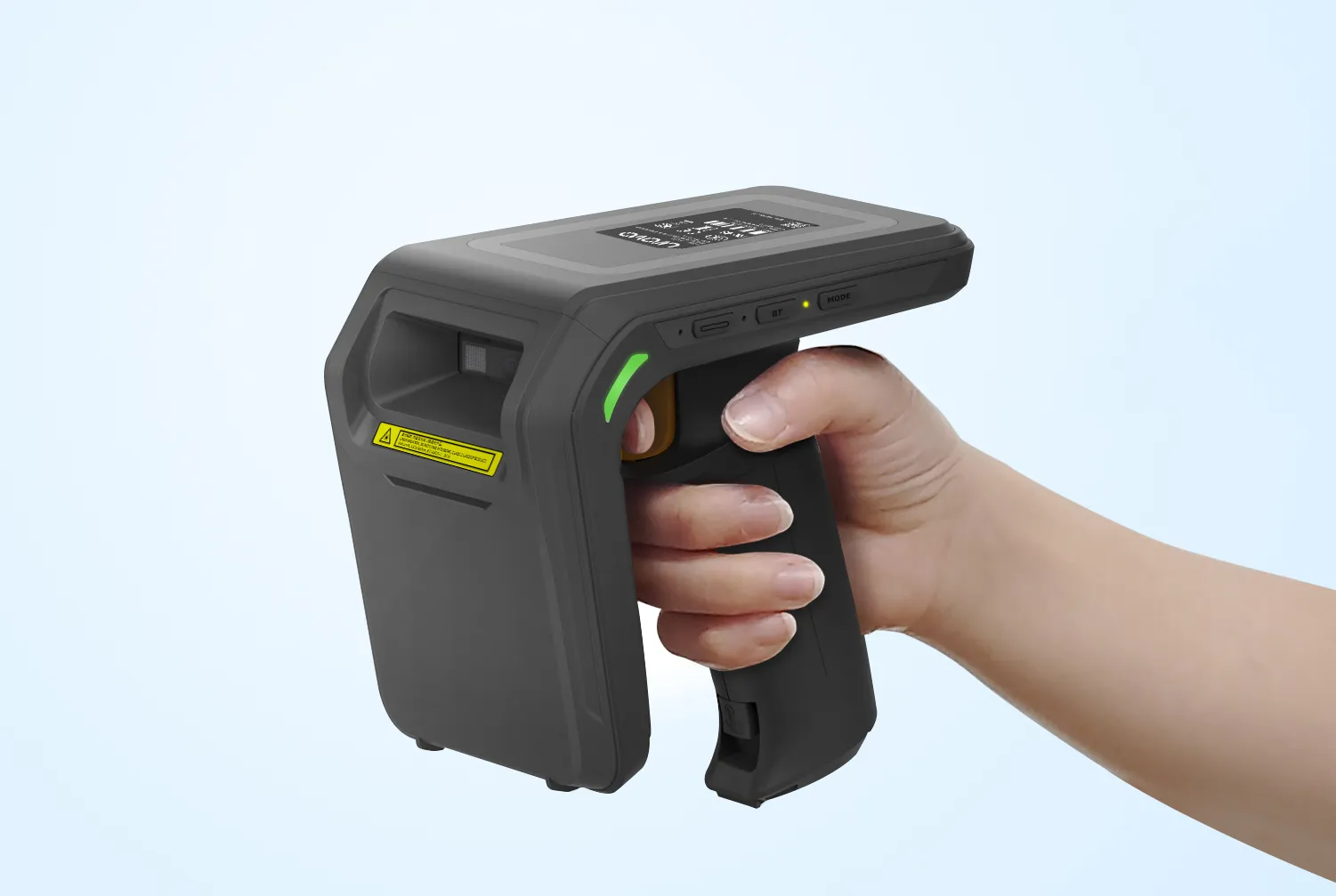
UROVO / UHF RFID sled
RFG91
UHF RFID sled for adding RFID capability to compatible mobile hosts.Devices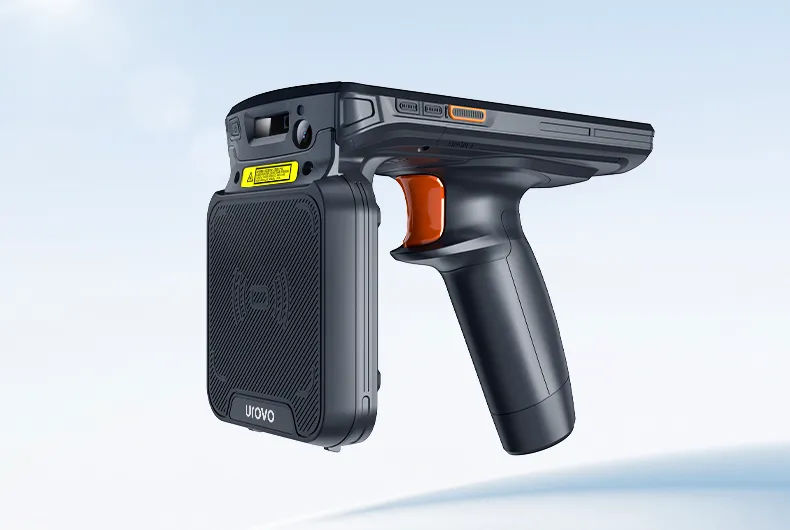
UROVO / UHF RFID handheld reader
DT50P Lite
Integrated handheld profile for mobile RFID inventory workflows.Devices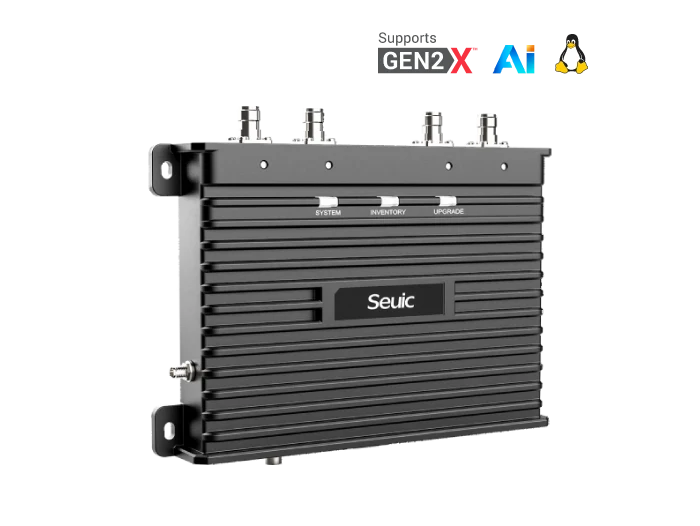
SEUIC (Dongji) / Fixed RFID readers
AUTOID UF40 Linux AI
Fixed-reader option for controlled RFID zones and infrastructure projects.DevicesProject intake
Project intake form
Submit the form to request a shortlist, validation plan, sample discussion or scoped OEM feasibility review. Restricted files require a separately agreed transfer method.